What causes port congestion in South Florida and the practical plays — pre-pulls, off-dock staging, flexible receiving — that keep freight moving.
Port Congestion: What Causes It and How Shippers Keep Freight Moving
Port Congestion: What Causes It and How Shippers Keep Freight Moving
Congestion is the weather of ocean shipping: you can’t control it, you can usually see it coming, and the shippers who prepare for it get wet less often. While South Florida’s ports historically run smoother than the mega-gateways, congestion still arrives here in episodes — vessel bunching after storms, labor and equipment crunches, holiday surges. This guide covers what actually causes the backups and the concrete plays that keep containers moving through them.
What causes congestion (it’s rarely one thing)
- Vessel bunching. Storms or upstream port delays push several arrivals into the same window. A terminal built for a smooth weekly flow suddenly digests three ships at once, and yard density spikes.
- Yard density itself. Terminals slow down non-linearly as they fill. Past a threshold, every move requires re-handling other containers, turn times stretch, and appointment slots shrink — exactly when demand for them peaks.
- Chassis and equipment imbalances. Freight can be released with no chassis available to carry it. Our chassis guide explains why the wheels are so often the constraint.
- Weather shutdowns. A two-day hurricane closure doesn’t create two days of backlog; it creates a week of compounding as delayed vessels, stacked appointments, and diverted freight all land together.
- Demand surges. Peak retail season and produce peaks load the system predictably — the calendar is the one congestion cause you can literally schedule around.
The shipper’s playbook
Before the episode
- Watch leading indicators. Vessel schedule integrity, terminal advisories, and your carrier’s turn-time reports flag trouble one to two weeks out. If your carrier can’t tell you this week’s average turn time, that’s a visibility gap.
- File everything early. Entries, ISF, releases — during congestion, freight with clean paperwork moves; freight with pending items waits behind it.
- Pre-book drayage capacity. Carriers triage during crunches. Standing customers with forecasted volume get trucks; day-of spot requests get a waiting list. The math behind that is in our contract vs. spot rates guide.
During the episode
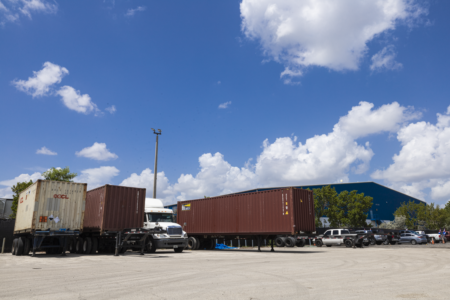
- Pre-pull on availability, deliver on schedule. The single best congestion play: pull the container the moment it’s available — even to a yard rather than your dock — because availability windows shrink when terminals are packed. Staging off-dock converts terminal risk (demurrage, missed appointments) into a controlled, cheaper buffer. That’s the core function of our yard storage near both ports.
- Open your receiving windows. Docks that accept 6 a.m. or evening deliveries let carriers use the appointment slots that exist rather than the ones you’d prefer.
- Prioritize ruthlessly. Move the shelf-life and revenue-critical boxes first; let the patient freight be patient. Communicate the ranking to your carrier instead of marking everything urgent.
After the episode
- Clear the empties. Backlogs end with a surge of empty returns just as terminals restrict what they’ll accept. Confirm return locations daily and keep per diem exposure visible — the fee mechanics are in our empty return guide.
- Debrief with data. Which containers paid fees and why? Which plays worked? Congestion repeats; your playbook should improve each cycle.
Why carrier structure matters most in bad weeks
In a smooth market, most carriers look similar. Congestion is where structure shows: asset-based carriers with their own trucks, chassis access, and yard space can keep executing pre-pulls and staging when brokered capacity evaporates. Ask any prospective carrier one question: “Walk me through what you did for customers during the last serious backlog.” Specific answers — dates, container counts, plays — are the tell.
Frequently asked questions
How long does port congestion usually last?
Weather-driven episodes typically clear in one to three weeks as schedules re-space. Demand-driven congestion (peak season) runs for the season and should be planned for, not waited out.
Does congestion pause demurrage and per diem?
Not automatically. Terminals sometimes extend free time during major disruptions, but you must document unavailability and appointment scarcity to argue relief. Never assume the clock stopped.
What’s the single best protection against congestion costs?
Pre-pull capability with off-dock staging. It decouples your freight from terminal conditions — the container moves when the port allows and delivers when your dock is ready.