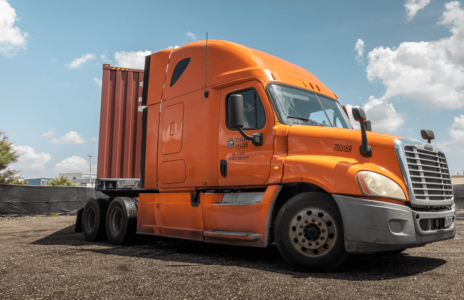
When contract drayage rates beat spot pricing, when spot wins, and how Miami importers structure a mix that survives peak season.
Contract vs. Spot Drayage Rates: Which Should You Use?
Contract vs. Spot Drayage Rates: Which Should You Use?
Every importer eventually faces the question: lock in drayage rates with a contract, or price each move on the spot market? The honest answer is that the right mix depends on your volume, its predictability, and how much delivery failure costs you. Here’s how the two models actually behave — especially in a market like South Florida where capacity swings with the season.
How each model works
Spot rates
You (or your forwarder) request pricing per move or per week. The rate reflects today’s balance of trucks and freight. Spot is simple, commitment-free, and — in soft markets — often cheaper than contract.
Contract rates
You agree on lane pricing for a period, usually six to twelve months, sometimes with volume expectations on your side and capacity commitments on the carrier’s. The number moves less; the relationship matters more.
When spot wins
- Low or lumpy volume. A few containers a month doesn’t give a carrier enough to plan around, and doesn’t give you leverage to negotiate. Spot quotes keep it simple — our drayage cost guide for Miami shows what goes into a quote.
- Soft markets. When trucks outnumber loads, spot prices sag below contract. Riding the spot market through a soft stretch is legitimate strategy.
- New lanes. Testing a new port or destination? Spot a few moves first; contract after you know the lane’s rhythm.
When contract wins
- Steady weekly volume. Predictable freight is worth a discount to a carrier because it fills schedules. You convert that value into rate stability and priority.
- Capacity insurance. The contract’s real product isn’t the rate — it’s the truck showing up in week 42 when spot capacity evaporates. In peak season, contract customers get served first; spot freight gets what’s left, at whatever the day costs.
- Fee-sensitive freight. If a missed pickup means demurrage, exam storage, or a broken retail appointment, rate savings of $50 a move are noise against a $1,500 failure. Fee mechanics are covered in our demurrage, detention & per diem explainer.
What a good drayage contract actually specifies
- Lane rates with named accessorials. Chassis, stop-offs, overweight, hazmat, waiting time — priced up front, not discovered on invoices.
- Fuel surcharge mechanism. Indexed to a published benchmark, adjusted on a stated cadence.
- Free time and staging terms. What happens when your dock can’t receive — including yard storage pricing for the buffer days.
- Service commitments both ways. Carrier commits capacity; you commit reasonable forecast accuracy. One-sided contracts fail in the exact weeks they’re needed.
- A review cadence. Quarterly rate-and-performance reviews keep the contract honest in both directions — pair them with the metrics from a carrier scorecard.
The mix most importers land on
A practical structure for South Florida importers: contract your base volume — the freight that arrives every week — with an asset-based carrier that owns its trucks and yard, and spot the overflow. Asset-based operators can commit capacity credibly because the trucks are theirs; brokered capacity commitments are only as good as the day’s market. That’s the model behind Go Drayage’s container drayage service.
Whatever you choose, re-quote annually. Markets move, and a contract that was fair in March can be off-market by November — in either direction.
Frequently asked questions
How much volume justifies a drayage contract?
There’s no magic number, but consistent weekly volume — even 3–5 containers — is enough for most carriers to price a lane commitment. Predictability matters more than raw count.
Are contract rates always cheaper than spot?
No. In soft markets spot can undercut contract for months. Contract buys stability and peak-season capacity, not a guaranteed discount.
Can I get contract rates without an RFP process?
Yes. For small and mid-size importers, a direct conversation with lane volumes and history is faster than a formal RFP and usually lands in the same place. Request a quote with your typical weekly volume to start that conversation.