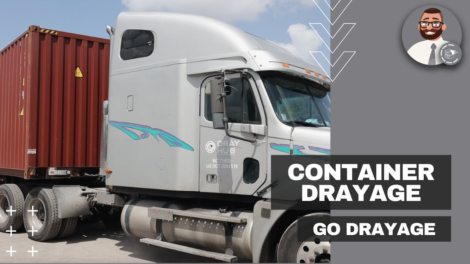
What is a container chassis, who pays for it, and why do chassis splits delay Miami shipments? A shipper’s guide to chassis types, fees, and fixes.
Container Chassis in Drayage: Types, Fees, and Why Splits Cost You Money
Container Chassis in Drayage: Types, Fees, and Why Splits Cost You Money
Every container that moves by truck rides on a chassis — the wheeled steel frame that turns an ocean box into road freight. Yet chassis are the part of drayage shippers think about least, right up until a “chassis split” fee appears on an invoice or a load sits at the port because no equipment is available. Here’s what importers and exporters in South Florida should know.
What a chassis is and who owns it
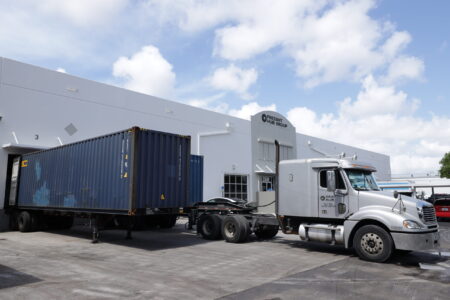
A chassis is a trailer frame built to lock onto a shipping container. Unlike in most of the world, U.S. ocean carriers generally stopped providing chassis years ago, so today the equipment comes from three sources: intermodal equipment providers that rent from pools, motor carriers that own their own fleets, and occasionally shippers that lease long-term. Who supplies the chassis — and who pays the daily rate — should be spelled out before the first container moves.
Common chassis types
- Standard 20ft and 40ft chassis — the workhorses for dry containers.
- Extendable chassis — adjust to fit 20ft, 40ft, and 45ft boxes.
- Tri-axle chassis — add a third axle to legally carry heavier loads, essential for overweight containers common in beverage, tile, and machinery imports.
- Genset-equipped chassis — carry a diesel generator to power refrigerated containers between port and warehouse.
If your cargo is heavy, dense, or refrigerated, say so at booking. Assigning the wrong chassis type is one of the most common causes of same-day dispatch failures.
What a chassis split is — and why it costs you
A chassis split happens when the container and an available chassis are in two different places. The driver must first drive to a depot to pick up a chassis, then proceed to the terminal for the container. That extra leg takes time and mileage, and most carriers bill it as a split fee, typically $50–$150 in South Florida depending on distance.
Splits get worse during peak season and after chassis pool shortages, when depots run empty and drivers hunt for equipment. Every hour spent hunting is an hour your container isn’t moving — and if it pushes pickup past the Last Free Day, demurrage stacks on top.
How asset-based carriers avoid the problem
The cleanest fix is working with a drayage carrier that controls its own equipment. Go Drayage runs company-owned trucks and equipment out of a five-acre yard minutes from PortMiami, which removes the depot detour from most moves. For heavy cargo, tri-axle capacity supports heavy hauling and overweight containers without the scramble to locate specialty equipment. And when a warehouse isn’t ready to receive, containers can wait in secure yard storage instead of burning port free time.
Chassis fees you may see on a drayage invoice
- Chassis usage — daily rental for pool equipment, commonly $25–$45 per day.
- Chassis split — the repositioning fee described above.
- Tri-axle or specialty surcharge — for overweight or reefer moves.
- Flip fee — when a container must be lifted from one chassis to another.
A transparent carrier will quote these up front. If a quote looks unusually cheap, ask which of these fees are excluded — that’s usually where the difference hides. You can compare all-in pricing with our instant drayage calculator.
Frequently asked questions
Do I need to arrange a chassis myself?
Usually not. Your drayage carrier arranges the chassis, either from its own fleet or a pool. Your job is to confirm at booking who is providing it, what the daily rate is, and whether your cargo weight requires a tri-axle.
Why was I charged chassis rental for days the container just sat?
Pool chassis bill for every calendar day the container stays mounted, including weekends and days it sits at your dock. Unloading promptly — or grounding the container at a yard — stops the meter.
What weight requires a tri-axle chassis in Florida?
As a rule of thumb, cargo over roughly 44,000 lbs in a 40ft container (or about 38,000 lbs in a 20ft) approaches legal limits on a standard chassis and should be flagged for tri-axle review. Exact thresholds depend on the truck and route, so share your cargo weight when requesting a quote.