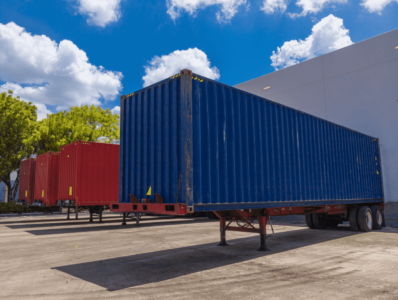
Miami is a natural gateway for auto parts and tires. Distributors here supply customers across Florida, the Caribbean and Latin America, and many of them receive full containers from Asia, Europe and Latin America. Tires and auto parts look simple, but they are tricky freight for drayage because of how they are loaded, how much they weigh and what the delivery site can handle. This guide covers the essentials.
How these cargoes behave in a container
Tires: cube-heavy, not always weight-heavy
Passenger tires take up a lot of space for their weight, so a container may be full by volume while remaining well under the weight limit. Truck and off-road tires are much heavier and can push the load toward weight limits. Check the total weight on the commercial documents, and see our guide to overweight container drayage in Florida if your cargo may be heavy.
Loose-loaded tires
Tires are often hand-loaded into the container without pallets to maximize quantity. That makes unloading labor-intensive and can lead to long dock times. Read about floor-loaded versus palletized containers to plan labor and equipment.
Auto parts: dense, mixed and valuable
Brake components, engines, transmissions, batteries and body parts can be heavy and may be packed on pallets or in crates. Heavy parts concentrate weight and may fail axle limits even when total weight is legal. See container weight distribution and axle limits.
Special considerations
- Batteries. Lead-acid and lithium batteries have specific rules; our guides on hazmat container drayage and lithium battery drayage explain what to check.
- Fluids and chemicals. Oil, coolant, paint and aerosols may be regulated; confirm classification before shipping.
- Odor and moisture. Rubber has a strong smell and absorbs moisture, so ventilate containers carefully. See container sweat and condensation.
- Documentation. Tires and vehicle parts may involve agency markings or specific entry requirements. Your customs broker can confirm what applies; see customs broker versus carrier roles.
Delivery planning
Match the receiver’s capability
Many auto-parts businesses in Miami-Dade are in industrial areas of Medley, Hialeah, Doral and North Dade, with docks and yards of varying size. Review our guides to Medley and Hialeah and Opa-locka and North Miami-Dade for site checks.
Export and re-export moves
Because Miami is a major distribution hub for the Caribbean and Latin America, some parts are re-exported. If your freight is moving on, see Caribbean and Latin America transshipment drayage and export drayage at PortMiami.
Storage and timing
If your warehouse is full or the container arrives before you have space, hold it in a secure yard rather than paying terminal storage. Our yard storage page has details, and last free day explains the clock you are racing.
How to get an accurate drayage quote
Tell your carrier the commodity, gross weight, whether the cargo is loose-loaded or palletized, whether it includes batteries or fluids, the delivery address and dock capability. That lets the carrier choose the right chassis, plan labor and avoid surprises. Start with our quote form or read about container drayage in Miami.
Frequently asked questions
Are tire containers usually overweight?
Passenger tires usually fill the container by volume before reaching weight limits, but truck, agricultural and off-road tires can be heavy. Always verify the actual gross weight before pickup.
Do car batteries require special drayage handling?
Yes. Batteries may be regulated as hazardous materials, which affects packaging, documentation and which carriers can move them. Confirm classification before booking.
Can I store my tire container before unloading?
Yes, a secure yard can hold the loaded container until your warehouse is ready, which helps avoid terminal storage and wait-time charges.