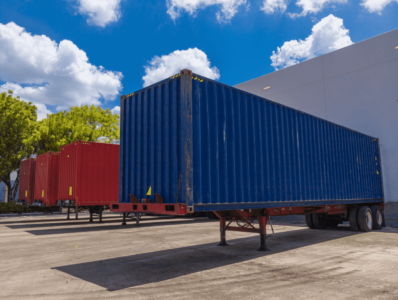
What happens between your delivery order and a container at your dock: how drayage dispatchers plan moves, and why some requests are easy and others are not.
What a Drayage Dispatcher Actually Does With Your Delivery Order
What a Drayage Dispatcher Actually Does With Your Delivery Order
Most importers experience drayage as a black box. You send a delivery order, and some number of days later a truck shows up. When it goes well, nobody asks how. When it goes badly, the question becomes urgent.
Knowing what happens inside that box is genuinely useful, because it tells you which of your requests are cheap and which are expensive — and those are not always the ones you would guess.
The inputs a dispatcher needs
Before anything can be planned, a dispatcher needs a specific set of facts. Missing any one of them stalls the move:
- Container number, size and type
- Discharge terminal
- Whether the container is released — customs, line and charges
- Last free day
- Delivery address, receiving hours and any appointment requirement
- Weight, and whether it is overweight for a standard chassis
- Whether it is live unload or drop
- Where the empty goes afterward
Our drayage quote information checklist covers this from the quoting side. The dispatch side needs the same information but sooner and more precisely.
The planning problem
A dispatcher is solving a constrained scheduling problem several times a day. The constraints:
Drivers. A finite number, each with hours-of-service limits. A driver who spends three hours in a terminal queue has lost most of a shift, which affects every other move assigned to them.
Chassis. The box needs one, of the right type. Overweight cargo needs a tri-axle. Reefers need gensets for certain moves. Chassis availability at a given terminal on a given morning is genuinely variable, which is why chassis splits and flips show up on invoices.
Terminal appointments. Finite slots in finite windows. When a big vessel discharges, the good slots are gone quickly.
Receiver hours. A warehouse that receives 8am–3pm with a two-hour appointment window is a much harder constraint than one that takes containers any time.
Free time clocks. Some containers must move today. Others can wait. Triage is constant.
Why some requests are cheap and others are expensive
This is the part worth internalising, because it is where importers have real leverage over their own costs.
Cheap: flexible delivery dates, drop-and-hook at a receiver with yard space, advance notice of several days, containers with clean releases and long free time, deliveries in established zones during normal hours.
Expensive: same-day requests, narrow appointment windows, live unloads that take four hours, deliveries that arrive at the receiver to find no dock available, containers released on their last free day, and after-hours or weekend moves.
The difference between drop-and-hook and live unload alone can change the economics of a whole program. A driver who drops a trailer and leaves can do several more moves that day. A driver who waits three hours at your dock cannot — and that time gets priced, either as detention now or as higher rates later.
Where plans break
Three failure modes account for most bad days:
- The container was not actually ready. A flag changed, or nobody re-checked. The truck arrives and cannot gate in.
- The receiver was not actually ready. No dock, no labor, no appointment on file, or the site cannot handle a 40ft container. Driver detention starts accruing.
- Equipment ran out. No chassis of the required type, or the terminal is not turning trucks fast enough.
None of these are solved by shouting at a dispatcher. They are solved earlier, by confirming status the day before and by making sure the receiving end knows what is arriving.
What asset-based dispatch changes
When a carrier owns its trucks and chassis, the dispatcher is reassigning resources they control. When a carrier brokers the move, the dispatcher is negotiating with someone else’s. On a normal Tuesday the difference is invisible. On the morning a hold clears late, or a vessel bunches, or a driver calls out, it is the whole difference.
Go Drayage dispatches company-owned trucks, vans, flatbeds and transloading equipment from a 5-acre yard in Miami with 24/7 access and capacity for roughly 450 containers. That yard matters to dispatch specifically: it gives a dispatcher somewhere to put a container when the plan changes, rather than leaving it under a terminal clock. Our container drayage page covers the service scope.
How to be an easy customer (and pay less for it)
Give forecasts, not just orders. Confirm release status the day before. Make sure your receiving site knows what is coming and can actually take it. Be honest about weights. Flag appointment requirements up front. Where you can, allow a delivery window rather than a delivery time.
Every one of those makes the scheduling problem easier, and easier scheduling shows up in your rates and your accessorials. If you want to talk through how your lanes are currently structured, get in touch or request a quote.
Frequently asked questions
How much advance notice should I give for a container delivery? For routine moves, two to three business days gives a dispatcher room to plan drivers, chassis and an appointment. Same-day and next-day requests are usually possible with an asset-based carrier, but they compete against already-planned work and are priced accordingly.
Why does my carrier keep asking whether it is a live unload or a drop? Because it changes how much of a driver’s day the move consumes. A drop takes minutes; a live unload can take hours. That difference drives both scheduling and cost, and it is why detention exists as a charge.
Can a dispatcher do anything about a container that is on hold? Not directly — holds are cleared by the importer, customs broker, forwarder or ocean carrier depending on the type. What a dispatcher can do is monitor for the moment it clears, hold capacity against it, and advise whether a pre-pull or yard storage is needed to protect you against free time running out.