A port slowdown or work stoppage can strand your containers. Here is a practical drayage contingency plan for South Florida importers.
Port Labor Disruptions: Building a Drayage Contingency Plan
Port Labor Disruptions: Building a Drayage Contingency Plan
Port labor negotiations are a recurring feature of the ocean freight calendar, and every few years a contract cycle raises the possibility of slowdowns or work stoppages at U.S. terminals. Most of the time nothing dramatic happens. When something does happen, the importers who cope well are the ones who built a plan in the quiet months rather than the panicked week.
This is a practical framework for South Florida shippers — not a prediction about any particular negotiation.
Understand what a disruption actually does
Labor disruptions rarely look like a switch flipping. The realistic scenarios are graduated:
- Slowdowns. Gate and crane productivity drop. Turn times stretch, appointments become scarce, and dwell increases across the board.
- Selective actions. Specific terminals or specific functions are affected while others operate normally.
- Full stoppage. Gates close. Nothing moves in or out.
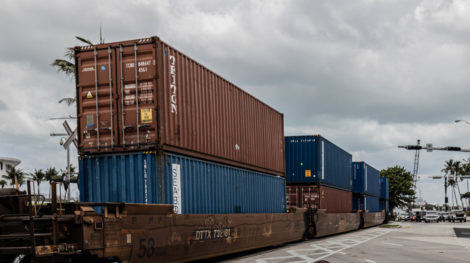
- The recovery. This is the phase people underestimate. Backlogs clear slowly, chassis are out of position, and congestion persists well past the resolution date.
Your exposure differs by scenario. A slowdown costs you time and accessorials; a stoppage costs you access to your cargo entirely.
Step one: know where your inventory actually is
Before you can plan, you need a live picture. For every in-transit container, know the vessel, ETA, discharge terminal, steamship line, free time terms, and whether the cargo is time-sensitive. Importers who keep this in scattered emails discover during a crisis that they cannot answer basic questions quickly.
Real-time visibility is worth building before you need it. Go Drayage customers track shipments through our cloud platform and shipment tracker, which matters most exactly when the situation is changing daily.
Step two: pull forward what you can
The single highest-leverage move ahead of a known risk date is reducing the number of containers sitting on the terminal. Practically:
- Pre-pull containers that have cleared customs but cannot yet be delivered, and stage them at an off-dock yard. This converts terminal exposure into controlled storage. See our explanation of what a pre-pull is.
- Return empties early. Empties sitting at your facility are per diem exposure that becomes much worse if empty returns are restricted.
- Accelerate customs clearance so entries are released and boxes are truckable the moment they are available.
Step three: secure trucking capacity in advance
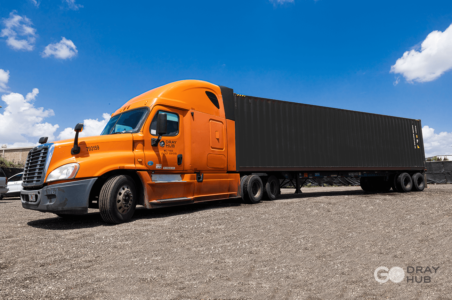
During a disruption, drayage capacity becomes the binding constraint. Brokered capacity evaporates first, because brokers do not own trucks — they compete for them alongside everyone else. Carriers with company-owned fleets and their own yard space can prioritize existing customers.
If your drayage is currently spot-bought from whoever is cheapest that week, you have no claim on capacity when it tightens. A standing relationship with an asset-based drayage carrier is the practical hedge, and it costs nothing to establish before you need it.
Step four: line up storage
Pulling containers forward only works if there is somewhere to put them. Yard space fills fast during disruptions, and so do warehouses. Confirm capacity commitments in advance — a verbal “we can probably fit you” is not a plan. Go Drayage’s Miami yard holds over 450 containers and trailers with 24/7 secure access and offers short- and long-term storage.
Step five: map alternatives, honestly
Rerouting sounds appealing and is often impractical. Before you count on it, verify:
- Does your steamship line actually call the alternative port on a workable schedule?
- Would the alternative be affected by the same labor action? Regional actions frequently are.
- What does the extra inland leg cost, and does it erase the benefit?
- Can your customs broker and drayage carrier operate at the alternative port?
Air freight is the other alternative, viable for high-value, low-weight, genuinely urgent cargo and almost nothing else. Our note on port congestion strategies covers related tactics.
Step six: talk to your customers early
The commercial damage from a delay is usually smaller than the damage from a surprise. Tell downstream customers what you know, what you are doing, and when you will update them again. Importers who communicate proactively keep accounts that would otherwise be lost.
Frequently asked questions
Does demurrage stop accruing during a port work stoppage?
Not automatically. Terminals and ocean carriers sometimes issue free time extensions during disruptions, but practice varies by terminal and by line and is announced case by case. Track official terminal and carrier notices and keep documentation of closure dates so you can dispute charges accrued while pickup was impossible.
Should I reroute cargo to another port preemptively?
Only after checking that your line calls the alternative on a workable schedule, that it would not be affected by the same action, and that the added inland cost does not exceed the delay cost. Regional labor actions often cover multiple ports, so rerouting within the same region may buy nothing.
How far ahead should I start planning?
Start when contract expiration dates are published, which is typically months ahead. The cheap preparations — knowing where your containers are, having a carrier relationship, confirming storage capacity — cost nothing if the disruption never materializes and are impossible to arrange once it has.