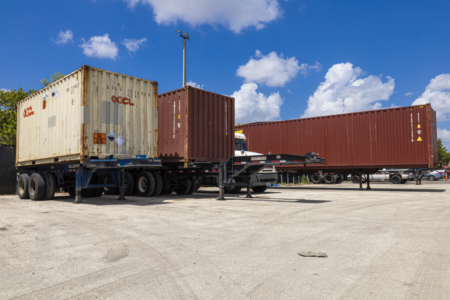
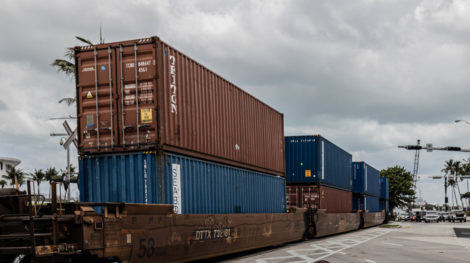
An arrival notice is a starting gun, not a finish line. Here is every field that matters and the five actions to take the day it arrives.
How to Read an Arrival Notice (and What to Do Next)
How to Read an Arrival Notice (and What to Do Next)
The arrival notice is the first document that tells you the clock has started. Most importers glance at the vessel name and file it. The ones who never pay demurrage read all of it — because almost every number you need to schedule a container pickup at PortMiami or Port Everglades is on that one page.
What an arrival notice is (and is not)
An arrival notice is a courtesy notification from the ocean carrier or NVOCC telling you that your shipment is arriving or has arrived, and what you owe before it can be released. It is not a customs release, it is not a delivery order, and it does not mean the container is available at the terminal yet. Treat it as a starting gun, not a finish line.
Reading it field by field
Vessel and voyage
Identifies the sailing. Useful for cross-checking against the terminal’s vessel schedule, because a vessel that is running late pushes every date downstream.
ETA and discharge date
The ETA is an estimate. The discharge date — when your specific container comes off the ship — is what actually starts free time. On a heavily loaded vessel, discharge can trail arrival by a day or more, and grounding at the terminal can trail discharge again.
Bill of lading number(s)
You may see two: a master bill of lading (carrier to NVOCC) and a house bill of lading (NVOCC to you). Your customs entry is filed against the house bill if there is one. Getting this wrong is a common cause of entry rejections.
Container number, size, and type
Check that the size and type match your booking. A 40HC where you expected a 40 standard changes what equipment your drayage carrier dispatches, and a reefer or flat rack changes it dramatically. Our container sizes guide covers what each type needs.
Last free day
Sometimes printed, sometimes not. If it is not on the notice, calculate it yourself from the discharge date and the free time in your contract, and confirm it against the terminal’s published number. This is the single most expensive field on the page.
Charges due
Ocean freight if collect, plus destination charges: terminal handling, documentation, chassis, ISPS, and any carrier-specific accessorials. The carrier will not issue a delivery order until these are paid, no matter how clean your customs entry is.
Release status
Look for a note about telex or express release. If it says originals are required and you do not have them in hand, you have a problem that will take days to solve. See our comparison of telex release vs original bill of lading.
The three gates, again
An arrival notice opens the door to gate one only. Nothing moves until all three are open: carrier release (charges paid, B/L surrendered), customs release (entry filed and cleared, including any FDA, USDA, or other partner-agency hold), and terminal availability (discharged, grounded, no holds).
Importers get burned when they assume the arrival notice means the container is ready. It routinely is not — and free time is running the whole time.
What to do the day it lands in your inbox
- Forward it to your customs broker immediately. They cannot file what they have not seen. If the entry is not filed before discharge, you are already behind.
- Forward it to your drayage carrier. Dispatch needs the container number, size, type, terminal, and last free day to plan chassis and appointments.
- Pay or arrange the destination charges. This is the step that most often stalls quietly, because nobody owns it.
- Confirm the release type. One email to your supplier now beats a week of letters of indemnity later.
- Decide whether you need the container at your door or in a yard. If your warehouse cannot receive within free time, a pre-pull into secure storage is usually cheaper than demurrage.
Local reality in South Florida
Miami and Port Everglades sit on short transit lanes from the Caribbean and Latin America. Transit times of three to seven days mean the paperwork gap is proportionally much larger than it is on a trans-Pacific lane — documents that would arrive comfortably ahead of a 30-day sailing arrive after a 5-day one. Build your process around that. Our PortMiami import container process walk-through covers the local sequence in detail.
How Go Drayage uses your arrival notice
Send it to us and dispatch builds the move backwards from your last free day: chassis assignment, terminal appointment, and a decision on whether to pre-pull into our five-acre secured Miami yard or run straight to your consignee. Because we are asset-based, we can hold the box on our own ground while your receiving schedule catches up. Start with a drayage quote or see our yard storage options.
Frequently asked questions
Who sends the arrival notice, the carrier or the forwarder?
Whoever holds the contract of carriage with you. On a direct ocean carrier booking the carrier’s local office issues it; on a booking made through an NVOCC or freight forwarder, the NVOCC issues its own arrival notice against its house bill of lading. If you booked through a forwarder, expect theirs — the carrier’s notice goes to the forwarder, not to you.
Why does my arrival notice show a different date than the terminal website?
The arrival notice shows the estimated or actual vessel arrival. The terminal shows when the specific container was discharged, grounded, and made available, which is often one to three days later on a busy vessel. Always schedule drayage against terminal availability, not against the arrival notice date.
What should I do the same day I receive an arrival notice?
Send it to your customs broker and your drayage carrier, confirm the last free day, and confirm whether the bill of lading has been released. Those three actions on day one prevent most demurrage.