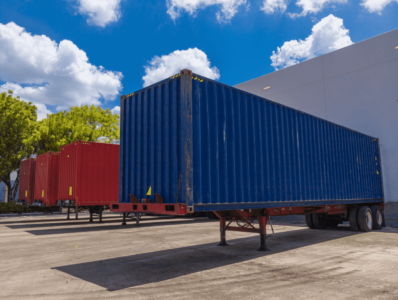
Follow an import container through PortMiami: vessel discharge, customs release, terminal appointments, drayage, last free day, delivery, and empty return.
The PortMiami Import Container Process, Step by Step
The PortMiami Import Container Process, Step by Step
Every import container that lands at PortMiami follows roughly the same journey from ship to shelf, and every step along the way has a clock attached to it. Miss one and the fees start stacking: demurrage at the terminal, per diem on the container, detention on the truck. Understand the sequence, and most of those fees become avoidable.
Here is the step-by-step path of a typical import container through PortMiami, along with the practical moves that keep it flowing.
Step 1: Vessel arrival and discharge
Your container’s journey ashore starts when the vessel berths and cranes begin discharging. Depending on where your box sits in the stow plan and how busy the terminal is, discharge can take anywhere from hours to a day or more after arrival. Once your container is grounded in the yard, the terminal marks it as discharged, but that does not yet mean anyone can come get it.
Practical tip: Track the vessel’s actual arrival, not just the schedule. ETAs shift, and free time calculations start from availability, so knowing the real dates keeps your planning honest.
Step 2: Customs release and holds
Before a container becomes available for pickup, it needs to clear several gates at once:
- Customs release. Your customs broker files the entry with CBP, typically before the vessel arrives. Most shipments release electronically without inspection.
- Freight release. The ocean carrier confirms its charges are paid and the original bill of lading (or telex release) is surrendered.
- Holds. CBP can place exam holds, and the terminal or the line can hold a box for documentation or safety reasons. An exam can add days and moves the container to an inspection facility before it comes back into the flow.
A container is truly ready only when every hold clears and every release posts. One missing item keeps the box locked in the yard while free time burns.
Practical tip: Have your broker file early and confirm all releases the day the vessel arrives, not the day you want the container. Chasing a freight hold on day four of five free days is how demurrage happens.
Step 3: Terminal availability and appointment
Once the container is discharged and fully released, the terminal shows it as available. PortMiami terminals use appointment and gate systems to manage truck flow, so your drayage carrier books a pickup window, assigns a TWIC-carded driver, and lines up a chassis.
This is where carrier quality shows. A carrier that watches availability in real time books the earliest workable appointment. A carrier that checks once a day loses a day, and your free time does not care whose fault that was.
Step 4: Drayage pickup
The driver enters the terminal, the container is loaded onto the chassis, and the box finally leaves port property. From here it is a trucking move like any other, with one exception: everything is still on a deadline, because the empty container has to come back within the ocean carrier’s allotted time or per diem charges begin.
Go Drayage runs this leg with company-owned trucks and tracks every move through its Go Truck Hub TMS, so customers can watch status through the shipment tracker instead of calling for updates. Base rates published on the Go Drayage homepage run $500 for Port of Miami and $450 for Port Everglades, with actual pricing varying by move.
Step 5: Last free day, the deadline that rules them all
Every import container gets a limited number of free days at the terminal before storage charges, called demurrage, begin. The final day of that window is the last free day (LFD), and it is the single most important date in the whole process. Miss it and you pay daily charges that escalate the longer the box sits.
The LFD moves around: weekends, holidays, exam holds, and terminal-specific rules all affect it. If you handle imports regularly, it is worth reading a full explanation of what last free day means in drayage and building your dispatch process around it.
Practical tip: Give your drayage carrier the delivery order as soon as you have it, and treat LFD minus two days as your real deadline. That buffer absorbs a missed appointment or a chassis shortage without costing you money.
Step 6: Delivery or yard staging
If your warehouse has a door and a crew ready, the container delivers straight from the port. But receiving schedules and vessel schedules rarely cooperate, and this is where a container yard earns its keep. Rather than leaving the box at the terminal accruing demurrage, your carrier pulls it before LFD and stages it at a secure yard until your dock is ready.
Go Drayage operates a 5-acre secure yard in Miami with 24/7 access and capacity for more than 450 containers and trailers, offering short- and long-term yard storage plus transloading with 19,000- and 40,000-pound forklifts for freight that needs to come out of the container entirely. Pulling to a yard converts an unpredictable terminal charge into a predictable staging cost you control.
Step 7: Empty return
After unloading, the empty container goes back to the location the ocean carrier designates, which may be the terminal or an off-port depot. The container’s free time with the line (separate from terminal free time) determines when per diem starts. Return locations and rules change frequently, and a good dispatcher confirms the correct return point before the truck rolls, because a rejected empty return wastes a full truck move.
The quick checklist for avoiding demurrage at PortMiami
- File customs entry before vessel arrival and verify all releases immediately.
- Confirm the last free day directly and recalculate after any hold.
- Tender the delivery order to your drayage carrier early.
- Book the earliest terminal appointment, not the most convenient one.
- Have a yard plan for containers your warehouse cannot receive in time.
- Confirm the empty return location before dispatching the return leg.
An asset-based carrier with its own trucks, its own yard, and real-time tracking can run this entire sequence as one coordinated motion. If you would like that for your PortMiami imports, contact Go Drayage or call (786) 445-0150.
Frequently asked questions
How long does it take to get a container out of PortMiami after the ship arrives?
It varies. After vessel discharge, the container must receive customs release, freight release, and clearance of any holds before the terminal shows it as available. With paperwork filed early and no exams, containers are often available within a day or two of discharge, and a drayage carrier can then book the next open terminal appointment.
What is the last free day and why does it matter?
The last free day is the final day a container can sit at the terminal without incurring demurrage charges. It is calculated from the container’s availability and adjusted for weekends, holidays, and holds. Missing it triggers daily storage fees, so most experienced importers plan pickups at least a day or two before the LFD.
What if my warehouse cannot receive the container before free time expires?
Have your drayage carrier pull the container to a secure yard before the last free day. Yard staging is typically far more predictable than terminal demurrage, and the container can then be delivered when your dock has capacity. Go Drayage stages containers at its 5-acre secure Miami yard with 24/7 access for exactly this situation.