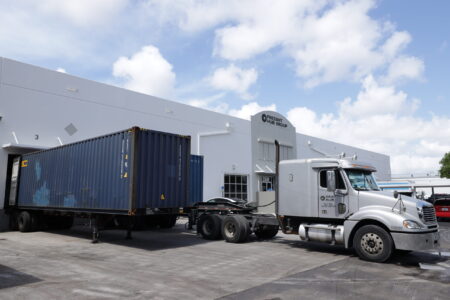
The empty went back and the terminal turned it away. Here is why returns get rejected at PortMiami and Port Everglades, and how to keep per diem from running.
When the Terminal Rejects Your Empty Return in South Florida
When the Terminal Rejects Your Empty Return in South Florida
The cargo is out, the box is empty, the driver took it back, and the terminal sent him away. This happens more than shippers expect in South Florida, and the per diem meter does not politely pause while it gets sorted out. Here is what causes it and what to do in the moment.
Why returns get rejected
The terminal is full
Empty stacks fill up, particularly during periods when vessel calls are irregular or a carrier is not repositioning equipment out of the region fast enough. When the yard has no space for more empties of that type, the gate stops accepting them. This is the most common cause and the most frustrating, because nothing about your container is wrong.
Return restrictions
The ocean carrier designates where its empties go back. That designation changes — sometimes weekly, sometimes with a day’s notice. A container that could go back to one terminal last month may now be restricted to a specific off-dock depot, or restricted to certain days. Sending a driver to yesterday’s location gets him turned away.
No appointment
Empty returns at PortMiami and Port Everglades terminals increasingly require their own appointment, separate from the import pickup. No appointment, no gate. See how terminal appointments work at both ports.
Container condition
Damage found at the in-gate can stop the return until the damage is documented and accepted. Trash, debris, dunnage or pallets left inside will also get a box refused — an empty is supposed to be empty and broom-clean.
Paperwork mismatch
Wrong booking reference, container number transposed, or the return credited against a different line. Administrative, fixable, and still a wasted trip.
What to do when it happens
- Get it documented at the gate. The driver should obtain a rejection ticket, a trouble ticket, or at minimum a photograph of the gate screen or the notice, with a timestamp. This document is the entire basis of any later per diem dispute.
- Record the specifics. Date, time, terminal, container number, reason given, and the name of the person who turned the truck away.
- Notify the ocean carrier the same day, in writing. Email, not a phone call. State the container number, the attempted return location and time, and the reason for refusal. Ask where and when they want it instead.
- Do not improvise a return location. An unauthorized drop can result in relocation charges and an unreturned container on the carrier’s books.
- Park it somewhere secure. An empty sitting on a street or an unsecured lot is a theft and liability problem. A container yard is the right holding place while the return sorts out.
The per diem argument
Federal Maritime Commission rules on detention and demurrage billing require that charges serve their purpose — incentivizing the return of equipment. When the equipment cannot be returned because the carrier’s designated location will not accept it, the incentive rationale does not hold, and that is the argument you make.
A dispute that works generally contains: the rejection documentation, the same-day written notice to the carrier, proof of the carrier’s return restriction in force at the time, and evidence of the next successful return attempt. A dispute that fails is usually one where nobody wrote anything down at the gate.
Our guide to disputing demurrage and detention charges covers the mechanics of filing, and the invoice audit checklist covers catching these charges before you pay them.
Reducing how often it happens
Check restrictions before dispatch, not after
A carrier that checks return locations the morning of the move rather than relying on last week’s instruction avoids most rejected returns outright. This is routine for carriers running daily volume through both ports and easy to miss for one that is not.
Use street turns where possible
A street turn reuses your empty directly for someone else’s export booking without it ever going back to the terminal. No return, no rejection risk, and the per diem stops. Requires the ocean carrier’s approval and a matching export booking, but when it lines up it is the cleanest outcome available.
Return promptly rather than optimally
Holding an empty to combine it with a future pickup saves a trip and risks a closed return window. When capacity is tight, returning early beats returning efficiently.
Keep the box clean
Instruct receivers not to leave dunnage, shrink wrap or broken pallets in the container. It costs nothing at the dock and a full trip if it gets refused.
The structural version of the problem
Recurring rejected returns usually mean equipment imbalance in the region — more empties coming in than going out. There is not much an individual shipper can do about that, but there is something a carrier with yard capacity can do: hold the box and keep attempting, rather than running your driver back and forth. Our notes on off-dock container storage cover how that works.
If you are dealing with repeated empty return problems at PortMiami or Port Everglades, get in touch — it is a routine part of what we manage.
Frequently asked questions
Who pays per diem when the terminal refuses the empty?
In principle the shipper should not be charged for days the container could not be returned through no fault of its own, and FMC rules on detention and demurrage billing support that position. In practice you will be billed and will have to dispute it, which is why documenting the rejection at the gate matters.
What is a return restriction?
An instruction from the ocean carrier limiting where and when a particular empty can be returned – a specific terminal, a specific depot, or specific days. Restrictions change frequently and are usually published by the carrier rather than the terminal.
Can I just leave the empty at a different terminal?
No. Returning to an unauthorized location can result in the container being refused, relocation charges, or the return not being credited at all. Confirm the authorized return location with the ocean carrier before dispatching the truck.