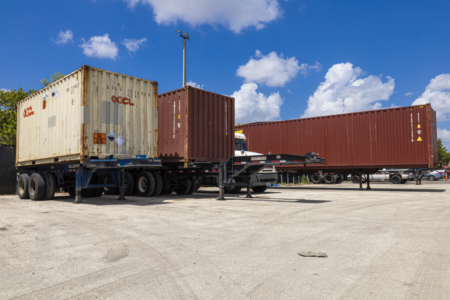
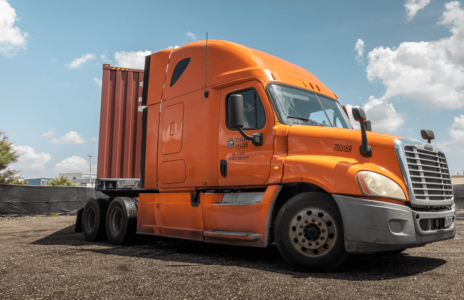
Almost every import container that lands at PortMiami belongs to the ocean carrier. You use it, you unload it, you give it back, and a meter runs the whole time. That’s a carrier-owned container, or COC, and it’s the default arrangement most importers never question.
The alternative is a shipper-owned container — SOC — where the box belongs to you or to a leasing company you contract with directly. SOC changes the economics of the entire post-discharge leg, sometimes dramatically. It also introduces obligations that catch first-timers out. Here’s the honest comparison.
The basic difference
COC (carrier-owned container): The steamship line supplies the box as part of the ocean freight service. You get a defined amount of free time to return it, after which detention or per diem accrues daily. You must return it to a depot the carrier designates.
SOC (shipper-owned container): The box is yours, or leased by you. The ocean carrier is selling you slot space on the vessel, not equipment. Nothing accrues after discharge because there’s no carrier equipment to return. Where the container goes afterward is entirely your decision.
What actually changes for drayage
The empty return disappears
This is the biggest operational difference. With a COC, the move isn’t finished when the cargo is unloaded — the empty still has to get back to an accepting depot, and that leg is where per diem quietly accumulates. Depots refuse returns for all kinds of reasons: full yard, wrong equipment type that day, carrier not accepting at that location. Our post on empty container returns and per diem covers how ugly that gets.
With an SOC, the box is simply yours. It can sit in a yard, at your warehouse, or go straight back out on an export booking. No clock, no depot, no refusal.
Demurrage still applies
A common misconception. SOC eliminates detention and per diem, not demurrage. As long as your loaded container is sitting in the marine terminal, the terminal’s storage clock runs regardless of who owns the box. Last free day discipline matters just as much.
Terminal handling and gate procedures
SOC units sometimes require extra verification at the gate — proof of ownership or lease, and confirmation that the container is on the booking as an SOC. Terminals and carriers occasionally treat SOC bookings differently in their systems, and a container coded incorrectly can stall a pickup. Give your drayage carrier the SOC documentation up front rather than at the gate.
Condition and CSC plating are on you
Every container in international service needs a valid CSC safety approval plate and must meet structural requirements. With a COC, that’s the carrier’s problem. With an SOC, it’s yours: inspections, plate validity, repairs, and the risk that a surveyor rejects the box before loading. Older, cheaper SOC purchases are cheap for a reason.
When SOC makes sense
Long dwell at destination. If cargo routinely sits in the container for weeks — seasonal inventory, construction materials staged for a project, goods awaiting a release — per diem on a COC will exceed the cost of owning a box surprisingly fast. Doing the arithmetic on your worst-dwelling lane is the honest test.
You need the container as storage. Some importers use containers as on-site storage at a job site or a facility with no warehouse. A COC used that way is a rental at daily rates that were never designed to be a storage product.
Round-trip or export-heavy lanes. If you also ship outbound, an SOC that arrives loaded and departs loaded avoids two empty repositioning moves and their associated charges.
Equipment shortages on your trade lane. During tight equipment markets, carrier boxes get scarce and expensive. Owning your own removes that dependency, though slot space can still be constrained.
Non-standard or specialized equipment. If you need a specific configuration the carriers don’t readily supply on your route, SOC may be the only way to get it.
When COC is the right answer
For most importers with predictable, fast-turning freight, COC wins. You avoid capital outlay, you avoid maintenance and repositioning headaches, you avoid the CSC compliance burden, and if your dwell time is short the free time covers you. Some carriers also decline SOC bookings on certain lanes or charge a premium that erases the savings, so it isn’t universally available.
There’s also a hidden cost: an SOC you don’t need immediately still occupies space somewhere. That’s a real line item unless you have a yard, which is why SOC programs often pair with off-dock container yard storage rather than replacing it.
The middle path most importers actually use
Rather than buying boxes, many shippers get most of the SOC benefit from a different move: pull the container off the terminal quickly, strip the cargo at a container freight station or transload facility, and get the empty back the same day. The cargo then sits in a warehouse where storage is cheap, instead of in a container where storage is billed by the day.
That’s often better than SOC because it removes the dwell problem without adding an asset to your balance sheet. Our guide to transloading in Miami walks through when it pencils out.
If you’re evaluating SOC in South Florida
The practical questions are: does your ocean carrier accept SOC on the lane, where will empties live between uses, who inspects and maintains them, and what does the return leg look like if you don’t have an outbound booking. A drayage provider with yard capacity and its own equipment can answer the second and fourth questions concretely, which is usually where SOC plans fall apart. Talk to us about how your lane would run.
Frequently asked questions
Do you still pay demurrage on a shipper-owned container?
Yes. Demurrage is charged by the marine terminal for the time a loaded container occupies terminal space, and it applies regardless of who owns the box. SOC eliminates detention and per diem — the charges tied to holding the ocean carrier’s equipment — not terminal storage.
Can any ocean carrier accept an SOC booking?
Not always. Acceptance varies by carrier, trade lane and vessel space, and some carriers apply different rates or surcharges to SOC bookings. Confirm acceptance and pricing before committing to buying or leasing equipment for a lane.
What is a CSC plate and why does it matter for SOC?
The CSC safety approval plate certifies that a container meets the international convention’s structural standards and shows the date its inspection is valid through. Containers in international service need a valid plate, and with a shipper-owned box maintaining that certification is the owner’s responsibility, not the carrier’s.