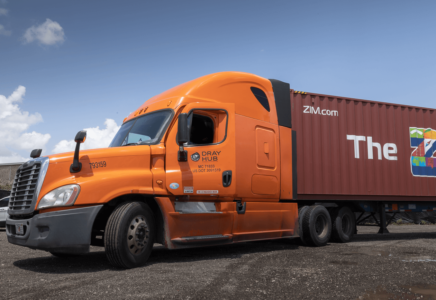
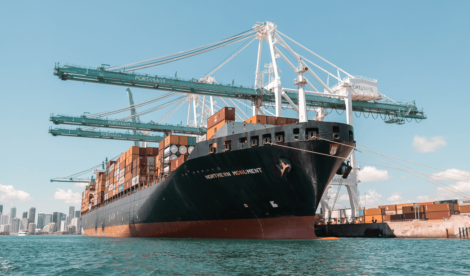
Miami International Airport handles more international freight than any other U.S. airport, and it sits about nine miles from PortMiami and thirty from Port Everglades. That proximity creates a category of local trucking that doesn’t fit neatly into either “drayage” or “cartage”: moving freight between air cargo facilities, ocean terminals, container freight stations and warehouses across Miami-Dade and Broward.
It’s short-haul work, but it has its own rules. Here’s what shippers and forwarders should understand about it.
The moves that actually happen
Airport pickup to warehouse or CFS
The most common. Freight arrives at an MIA cargo handler, clears, and needs to move to a consignee, a forwarder’s facility, or a container freight station for deconsolidation. Usually palletized or loose, moving on a flatbed, box truck or dry van rather than in a container.
Sea-air and air-sea transfers
Miami is a genuine sea-air gateway. Cargo arrives by ocean from Asia or Europe, gets stripped, and flies onward to Latin America and the Caribbean — or the reverse. That means a container is pulled from PortMiami, transloaded, and the freight is delivered to an airline’s cargo facility for an outbound flight. The whole sequence is time-sensitive against a flight cutoff.
Airport to port for ocean export
Less common but real: high-value or urgent freight flown into Miami and consolidated into an ocean container for a regional destination where ocean is cheap and fast enough.
Transfers between MIA handlers
Freight moving between ground handlers, bonded warehouses or forwarder facilities in the airport perimeter — the Airport Corridor, NW 36th Street, Doral and Medley.
What makes airport freight different from port drayage
Cutoff times are unforgiving. A vessel that misses a cutoff catches the next one in a week. A flight that misses a cutoff is worse in one respect: air freight is on the ground for a reason, usually urgency, and the customer feels every hour. Airline acceptance cutoffs are typically several hours before departure and vary by carrier and commodity, especially for anything requiring dangerous goods acceptance.
The freight isn’t in a container. Air cargo arrives on ULDs, on skids, or as loose pieces. Handling equipment differs — you need dock-height trailers, liftgates or forklift capability at both ends rather than a chassis and a crane.
Security programs apply. Freight moving in the air cargo chain sits inside TSA’s security framework, and carriers handling it need appropriate standing. If your freight is entering the air supply chain, confirm your trucker’s status before you book, not at the dock.
Customs status travels with it. Freight moving in-bond between an airport facility and a port, or between bonded facilities, needs the transportation to be handled by a party authorized to move bonded cargo. Our bonded drayage guide covers what that means in practice.
Wait times are the hidden cost. Air cargo pickup queues at busy MIA handlers can be long and unpredictable. Detention and driver waiting time show up more often on airport work than on port drayage, and any quote that doesn’t state a free time allowance and an hourly rate after it is incomplete.
The geography that matters
The freight cluster around MIA is dense and drives routing decisions:
- Airport Corridor / NW 36th Street — ground handlers, airline cargo facilities, bonded warehouses.
- Doral — forwarder offices and warehousing, immediately west of the airport.
- Medley and Hialeah — the transload, cross-dock and distribution belt, with heavy container traffic. Our post on Miami’s warehouse delivery zones covers this in detail.
- PortMiami — reached via the Port Tunnel or the Port Boulevard bridge, roughly 20 to 40 minutes from the airport depending on time of day.
- Port Everglades — about 30 miles north, an hour or more in traffic.
Peak-hour congestion on the Palmetto and 826 is the practical constraint. A run that takes 25 minutes at 10am takes an hour at 5pm, and on a sea-air transfer with a flight cutoff that difference is the whole job.
How to plan a sea-air transfer without missing the flight
- Fix the airline cutoff first, then work backward: acceptance time, transit, transload duration, container pickup, customs release, terminal availability. Build in a buffer for the terminal queue, which is the least predictable element.
- Pull the container early. If the vessel discharges Monday and the flight is Wednesday, get the box out Monday and into a yard or transload facility. Racing the terminal on the same day as the flight is how transfers fail.
- Confirm the transload facility can handle the commodity — palletizing capability, shrink wrap, weighing, dimensioning for air rates, and any repack the airline requires.
- Get the paperwork moving in parallel. Air waybill, dangerous goods declaration if applicable, and any in-bond documentation. Documentation delays cause more missed cutoffs than trucks do.
- Have a plan B flight. Missed acceptance on a Latin America route often means the next day, not the next week — but knowing which flight is the fallback beats improvising.
Working with one provider across air and ocean
The awkward part of sea-air work is that it usually crosses three vendors: an ocean drayage carrier, a transload facility, and a local cartage company for the airport leg. Every handoff is a place where a cutoff gets missed and nobody owns it.
Consolidating the sequence with a single asset-based operator that has a yard, transload capability and its own trucks removes those seams. Go Drayage runs a five-acre secure yard in Miami with forklifts to 40,000 lbs, transloading capability and company-owned equipment, so a container can come off PortMiami, be stripped and re-palletized, and move to an MIA handler under one dispatch. See our full service list or get in touch to talk through a specific transfer.
Frequently asked questions
How far is Miami International Airport from PortMiami?
Roughly nine miles by road, typically 20 to 40 minutes depending on traffic and which route is used. Port Everglades is about 30 miles north of MIA and usually takes an hour or more in daytime traffic.
Can the same carrier move both my ocean containers and my air freight?
Yes, provided the carrier has the right equipment and standing for both. Container work needs chassis and terminal access; air cargo work needs dock-height or liftgate equipment and appropriate status within the air cargo security framework. Confirm both before assuming one provider covers the whole sequence.
What causes most missed flight cutoffs on sea-air transfers?
Documentation and container release timing, more often than trucking. Pulling the container from the terminal a day or more before the flight, rather than the same day, removes the largest source of risk.