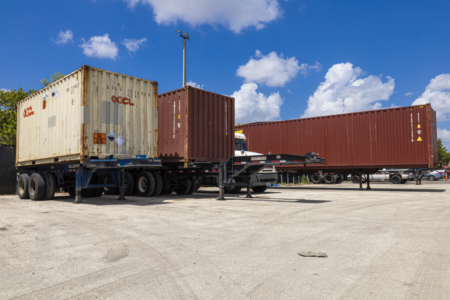
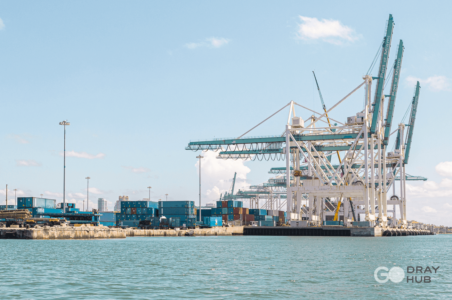
Drayage is a small share of total freight miles and a disproportionate share of port-adjacent emissions. Short trips, heavy loads, extended idling in gate queues, and historically older equipment add up. That combination has made drayage fleets an early target for emissions regulation and for corporate reporting requirements.
If you’re a shipper, this affects you in two ways: which carriers can legally serve a given port, and what emissions data you can report to your own customers.
How clean truck programs generally work
Port-level clean truck programs have appeared in different forms at different ports, but the common elements are recognizable:
- A registry. Trucks must be registered to enter terminals, with engine year and emissions data on file.
- Engine model year cutoffs. Older engines are progressively banned from terminal access.
- Phased implementation. Requirements tighten on a published schedule, giving fleets time to turn over equipment.
- Zero-emission targets. Longer-term goals for battery-electric or hydrogen drayage tractors, generally with target dates rather than immediate mandates.
The specifics vary substantially by port and by state, and they change. If emissions compliance affects your routing decisions, verify the current requirements for your specific terminals rather than relying on general guidance — including this article.
What it means practically for a fleet
The operational reality behind the policy:
- Capital cycles shorten. Equipment that would have run another five years gets replaced sooner.
- Zero-emission drayage is genuinely hard. Container work involves heavy gross weights, long duty days, and unpredictable dwell. Charging infrastructure at ports and yards is the binding constraint more often than vehicle range.
- Costs flow through. Fleet renewal is expensive and eventually shows up in rates.
- Owner-operator models strain. Independent drivers financing new equipment on drayage margins is the pressure point in most of these programs.
EPA SmartWay
Separate from mandatory programs, SmartWay is EPA’s voluntary partnership for freight efficiency. Participating carriers report fuel use and activity data annually; EPA provides standardized efficiency metrics in return.
Why it matters to shippers:
- It gives you carrier-level emissions performance data in a consistent, comparable format
- Many corporate procurement policies now require or prefer SmartWay partners
- The data supports your own Scope 3 emissions reporting
Go Drayage operates as an EPA-certified SmartWay partner. It’s one of several credentials worth checking when you evaluate a carrier — our guide to drayage carrier credentials covers the rest.
Emissions reductions that don’t require new trucks
The largest near-term reductions in drayage emissions come from moving fewer empty miles, not from vehicle technology:
- Street turns. Reusing an empty container directly for an export load eliminates two trips to the terminal. See street turns in Miami drayage.
- Reducing chassis splits. Every split adds an empty leg.
- Appointment discipline. Idling in a gate queue burns fuel and produces emissions with zero freight moved.
- Yard positioning. A staging yard near the terminals shortens every leg of every move.
- Transloading and consolidation. Fewer, fuller units inland.
These are the same practices that reduce cost and dwell time. Efficiency and emissions point in the same direction in drayage more reliably than in most freight modes.
What shippers should ask
- Is your fleet compliant with the current requirements at my terminals? And what’s the plan for upcoming phases?
- What’s the average engine model year of the trucks serving my freight?
- Are you a SmartWay partner, and can you share your performance data?
- Can you report emissions per shipment for my Scope 3 reporting?
- What are you doing about empty miles? This is the question that separates real programs from marketing.
An asset-based carrier can answer all five about its own equipment. A broker can only relay what subcontracted carriers tell it, which is a meaningfully weaker basis for your own reporting.
The South Florida picture
Miami-Dade and Broward air quality, port-adjacent residential communities, and Florida’s own regulatory environment all shape how this plays out locally. The direction of travel is consistent even where the timelines aren’t: newer equipment, better data, fewer empty miles.
Go Drayage runs company-owned tractors from a five-acre Miami yard positioned between PortMiami and Port Everglades, which is itself an emissions strategy — shorter legs, fewer repositioning trips, less time in queues. See our Miami container drayage for how that works day to day.
Frequently asked questions
What is a clean truck program?
A port or regional program that restricts terminal access based on truck engine emissions standards, usually through a registry, model-year cutoffs that tighten over time, and longer-term zero-emission targets. Requirements vary by port and change, so verify current rules for your specific terminals.
What is EPA SmartWay?
A voluntary EPA partnership program in which carriers report fuel use and freight activity annually and receive standardized efficiency metrics. Shippers use SmartWay data for carrier selection and to support their own freight emissions reporting.
Are electric trucks used for container drayage?
Some fleets are deploying battery-electric drayage tractors, mostly at ports with supporting infrastructure and incentive programs. Adoption is limited by charging availability, heavy gross weights and long duty cycles, so diesel remains the majority of drayage capacity today.