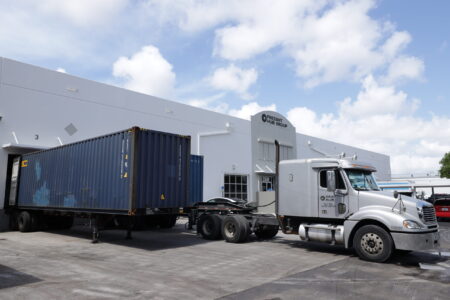
Before you stuff an export container, someone has to certify it cargo-worthy. Here is what the inspection covers and what gets a box rejected.
Cargo-Worthy Containers: What the Inspection Actually Checks
Cargo-Worthy Containers: What the Inspection Actually Checks
Import containers get inspected for cargo condition. Export containers get inspected for the container itself. If you are stuffing a box in South Florida for an ocean move, a cargo-worthy determination stands between your freight and a rejected booking — and the checks are more specific than “looks fine.”
The grades, from worst to best
Containers are traded and leased against a rough quality ladder. The terms are not perfectly standardized across the industry, but these are the common rungs:
- As-is — sold in whatever condition it sits in. No warranty, no certification. Fine for a storage shed, not for freight.
- Wind and watertight (WWT) — keeps weather out. Doors close and seal, roof does not leak. Says nothing about structural integrity or whether it can legally go on a ship.
- Cargo-worthy (CW) — structurally sound, seaworthy, with a valid CSC safety approval plate. This is the standard for international ocean shipment.
- IICL-5 — inspected to the Institute of International Container Lessors’ stricter criteria. Common for leasing fleets; tighter tolerances than CW.
- One-trip / new — a single repositioning voyage or zero. Cosmetically and structurally near-new.
The difference between WWT and CW is the one that bites people. A box can be perfectly dry inside and still fail cargo-worthy on a bent corner casting or an expired plate.
What the inspector actually looks at
The CSC plate
Required by the International Convention for Safe Containers. It is a metal plate, usually on the left-hand door, carrying the approval reference, date of manufacture, maximum gross weight, allowable stacking weight, and racking test value. Missing plate, illegible plate, or a next-examination date in the past all fail the container. This is the first thing checked because it is the fastest.
Corner castings and the frame
The eight corner castings carry every load the container experiences — lifting, stacking, twistlock securing. Cracks, deformation, or elongated holes are structural failures, not cosmetic ones. The same applies to the corner posts, top and bottom rails, and the door header.
Floor
Marine plywood floor, typically 28mm. Inspectors check for soft spots, delamination, holes, oil saturation, and previous repairs that were not done properly. A floor that flexes under a forklift will not hold a loaded pallet on a rolling ship.
Walls, roof and light test
The classic test: close the doors, stand inside, look for daylight. Any pinhole shows up immediately. Corrugated walls are checked for dents deeper than roughly 35mm, and the roof is checked for standing-water dents and puncture repairs.
Doors and gaskets
Both doors must open a full 270 degrees and close without forcing. Locking bars, cams, keepers and hinges all get checked. Gaskets must seat continuously — a compressed or torn gasket is the most common source of water damage claims on an otherwise sound box.
Odor and cleanliness
Easy to overlook and a frequent rejection at destination. A container that previously carried hides, chemicals, fish meal or anything strongly aromatic can taint a food or textile cargo. Sniff test before stuffing, every time.
Where this fits in a South Florida export move
When you pull an empty for an export stuffing, you sign an equipment interchange receipt taking custody of that container. That signature is where responsibility transfers. If the box is defective and you note nothing, the damage becomes arguable at return. Our guide to interchange receipts and damage claims covers how that document works in both directions.
Practical sequence on an export: pull the empty, inspect before it leaves the depot if possible, note any defects on the EIR, stuff, seal, and deliver against the earliest receiving date and cutoff at the terminal. A box rejected at the in-gate after it is loaded is an expensive problem — you are now unstuffing, re-stuffing, and probably missing the vessel.
Cargo-worthy vs. CTPAT inspection
Different purposes, sometimes done at the same moment. A cargo-worthy inspection asks whether the container is structurally fit. A CTPAT 7-point inspection asks whether anything has been concealed in it. Security-conscious exporters do both before loading, and the seven-point walk-through catches a fair number of structural defects along the way.
The short version
Check the plate, check the corners, check the floor, do the light test, smell it, and write down anything you find before you load. Five minutes at the depot is cheaper than a rolled booking. If you are stuffing exports in Miami or Fort Lauderdale and want the empties pulled and inspected before they reach your dock, that is part of what we do — talk to us or get a quote.
Frequently asked questions
What does cargo-worthy mean?
Cargo-worthy (CW) means a container has been inspected and certified structurally sound and suitable for international ocean shipment. It is a higher standard than wind-and-watertight, which only means the box keeps weather out. A cargo-worthy container has a valid CSC safety approval plate and no structural defects.
How long is a CSC plate valid?
The initial safety approval runs five years from the date of manufacture, after which the container must be re-examined – either on a periodic schedule or under an approved continuous examination program. The next examination date is marked on the plate or a decal near it.
Can I refuse a container that is not cargo-worthy?
Yes, and you should. If the box you are given for an export stuffing has structural damage, a missing or expired CSC plate, or holes that let light through, note it on the interchange receipt and request a replacement before loading. Once you stuff it, the problem becomes yours.