On Florida’s interstate system the federal limits apply: 80,000 pounds gross, 20,000 pounds on a single axle, 34,000 pounds on a tandem axle, and whatever the Federal Bridge Formula allows for any group of axles. Anything above those numbers needs an overweight permit from FDOT, and the fastest way to fail a scale is to […]
The three classification errors that cost Florida importers the most money are using the supplier’s foreign HS code as if it were a U.S. HTS code, classifying by what a product is made of instead of what it does, and never revisiting a code after the product changed. Each one quietly overpays or underpays duty […]
A truck moving hazardous materials in Florida must display placards when the load contains any quantity of a Table 1 material, or 1,001 pounds or more aggregate gross weight of Table 2 materials. Placards go on all four sides of the vehicle, they must match the hazard class of what is actually loaded, and the […]
Most Miami export shipments valued above $2,500 per Schedule B number require Electronic Export Information (EEI) to be filed in the Automated Export System (AES) before the cargo leaves the United States. You file through ACE AESDirect, you file it by a deadline that depends on your mode of transport, and the carrier cannot legally […]
Freight shipping from Miami to Costa Rica moves as ocean LCL or FCL into Puerto Limon-Moin on the Caribbean side, or as air cargo from MIA into San Jose with next-day arrival. Water transit is generally 4–8 days, and realistic door-to-door timing is 9–16 days by ocean or 3–5 days by air once Costa Rican […]
Medley and Hialeah form the core of Miami-Dade’s industrial warehouse belt, sitting between PortMiami, Miami International Airport and the Palmetto and Okeechobee corridors. That location is why so much import distribution, ecommerce fulfillment and cross-dock activity concentrates here. Below are ten warehousing and 3PL operators serving the area in 2026. Capabilities, capacity and certifications change. […]
A container freight station is a CBP-designated facility where LCL ocean containers and air consolidations are deconsolidated, sorted and released to individual consignees. Miami has an unusually dense CFS cluster because so much Latin America and Caribbean groupage moves through PortMiami, Port Everglades and MIA. Below are ten operators serving the market in 2026, with […]
Amazon Warehousing and Distribution is upstream storage that feeds FBA automatically, while a Miami 3PL is independent storage that can feed FBA, your own website, wholesale accounts and other marketplaces. AWD usually wins on pure Amazon-only storage economics; a 3PL wins the moment you sell anywhere else, import through South Florida, or need control over […]
A bill of lading is a document of title — whoever holds the original controls the cargo — while a sea waybill is a non-negotiable receipt that releases cargo to the named consignee without any paper changing hands. For Miami exporters, the rule of thumb is simple: use a sea waybill when you trust the […]
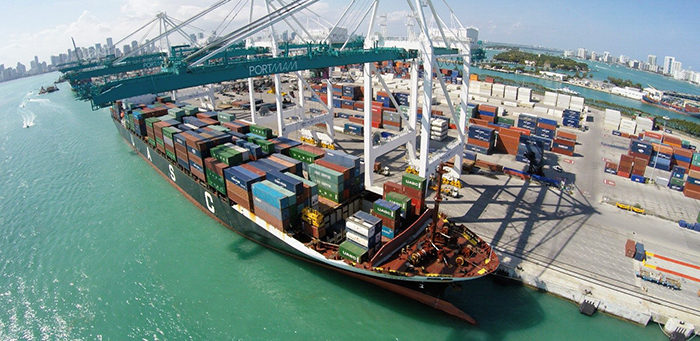
An empty container return at PortMiami has to go back to the location the ocean carrier designates, within the free time on your bill of lading, usually with an appointment. Miss any of those three and you start paying per diem — carrier detention on the equipment — which accrues daily until the box is […]