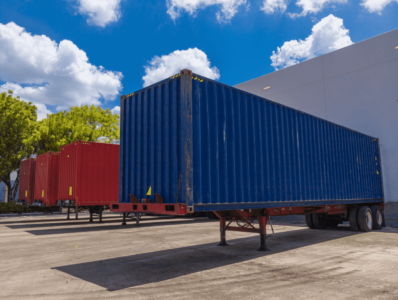
How 3PL and warehouse operators should structure drayage: information flow, dock capacity matching, carrier selection, and the metrics that matter.
Drayage for 3PL and Warehouse Operators: Setting Up Reliable Port Pickups
Drayage for 3PL and Warehouse Operators: Setting Up Reliable Port Pickups
Warehouse and 3PL operators live with a specific problem: your customers judge you on how fast their freight becomes available in your WMS, but the first leg — getting the container from the port to your dock — is run by someone else. This is a practical guide to setting up drayage so that port pickups stop being the unpredictable part of your operation.
Why 3PL drayage is a different problem
An importer moving twenty containers a year cares about each one individually. A 3PL moving containers for thirty clients cares about flow — steady arrivals, predictable dock loading, no Friday pileups. Those are different optimization targets and they need a different setup.
Three things make 3PL drayage distinct:
- You do not own the cargo. Release documents, customs entries, and freight payment sit with your client or their broker, so your visibility is secondhand.
- Your dock is the constraint. Container flow has to match door and labor capacity, not just port availability.
- You are accountable for a delay you cannot control. Your client sees your name on the delay.
Set up the information flow first
Get arrival notices routed to you and to your carrier
The single biggest improvement most 3PLs can make is receiving arrival notices at the same time their client’s broker does, and forwarding them to drayage immediately. Every day of lead time is a day dispatch can plan against instead of react to.
Establish who confirms release
Decide explicitly whether you, the client’s broker, or the drayage carrier is responsible for confirming customs release and freight release before a pickup is attempted. Ambiguity here produces dry runs, and dry runs get billed.
Standardize a container handoff record
Container number, size and type, gross weight, steamship line, terminal, last free day, per diem start, and the delivery address. If your intake form captures those fields consistently, most avoidable problems disappear. Our drayage glossary is a useful reference for aligning terminology across your team.
Match container flow to dock capacity
Cap daily arrivals honestly
Know how many containers your team can genuinely strip in a day and tell your drayage carrier that number. A carrier planning against a real ceiling delivers a smooth week. A carrier planning against an optimistic one delivers a Tuesday disaster.
Default to drop-and-hook for anything slow
Live unloads tie up a driver and a door simultaneously and generate waiting-time charges. For floor-loaded containers or anything taking more than an hour, drop-and-hook is almost always cheaper and easier to schedule. Details in our comparison of drop and hook vs. live unload.
Use off-dock storage as a buffer
When client containers arrive faster than you can process them, the choice is between terminal demurrage, blocking your yard, or off-dock staging. Staging is usually the cheapest of the three and it keeps your yard clear. Go Drayage’s yard storage is set up specifically for staging South Florida import containers that are not ready for a door yet.
Choose a carrier that fits a 3PL workflow
Beyond the obvious credentials, look for:
- Multi-account handling. Can they keep thirty clients’ containers straight and bill them separately or consolidated, as you need?
- Real tracking, not phone calls. If your CSRs have to call for status, drayage becomes a labor cost. Container-level visibility you can pass to clients is worth more than a slightly lower per-move rate.
- Data connectivity. Status feeds into your WMS or TMS beat email updates. See our post on connecting drayage data to your TMS.
- Asset-based capacity. When appointments are tight, a carrier that controls its own trucks and chassis can prioritize; a broker is bidding for capacity like everyone else.
- Overweight and reefer capability. Client mix changes. A carrier that can only handle standard dry loads becomes a constraint the first time a heavy container shows up.
Track the right numbers
Four metrics tell you whether your drayage setup is working:
- Days from availability to pickup. Measures appointment performance and release discipline.
- Demurrage and per diem incidents per hundred containers. The clearest cost signal.
- On-time delivery to the promised window. What your clients feel.
- Dry runs and re-dispatches. Almost always an information problem, and fixable.
Track these by client as well as in aggregate — one client with chronic release delays can make your whole operation look worse than it is.
Frequently asked questions
Should a 3PL use one drayage carrier or several?
A primary carrier with deep integration plus a secondary for overflow works better than spreading volume thin. Duals, street turns, and chassis continuity all depend on a single dispatcher seeing your full container picture, and those efficiencies disappear when volume is fragmented.
Who is responsible for demurrage on a 3PL-managed container?
That depends entirely on your service agreement with the client, which is why it should be explicit. Most disputes come from unwritten assumptions about who was supposed to confirm release and who controlled the delivery timing.
Can a drayage carrier deliver directly to my clients instead of my warehouse?
Yes. Port-to-door moves that bypass your facility are common when cargo does not need to be handled, stored, or reworked. It is worth reviewing which client containers genuinely need to touch your dock at all.