Who is liable for chassis condition under FMCSA roadability rules, what drivers must inspect, how to document defects, and what it means for drayage delays.
Chassis Roadability: Who Is Responsible When Equipment Fails
Chassis Roadability: Who Is Responsible When Equipment Fails
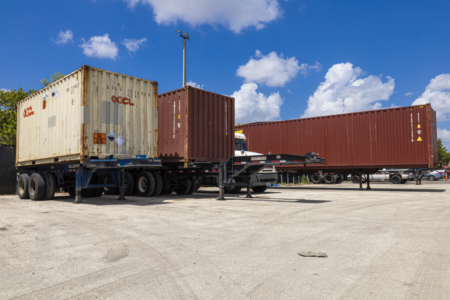
A drayage driver hooks a chassis, notices a soft tire and a dead marker light, and now everyone has a problem. The container is due at a distribution center. The terminal is busy. The chassis belongs to a pool, not to the trucking company. Who is responsible, and who pays for the delay?
Roadability is the framework that answers that question, and it is one of the few areas of drayage where the rules are genuinely clear — even if the practice around them often is not.
What roadability means
Under federal intermodal equipment regulations, the party that offers a chassis for interchange — the intermodal equipment provider, or IEP — is responsible for maintaining it in safe operating condition. IEPs must register with FMCSA, maintain systematic inspection and repair programs, keep records, and display a USDOT identification on the equipment.
That was the central reform: before it, chassis condition sat in a gray zone between ocean carriers, leasing companies, terminals, and truckers. Now the provider owns the maintenance obligation.
But the driver still owns the decision
Here is the part that surprises people. The IEP is responsible for maintaining the equipment. The motor carrier and the driver remain responsible for not operating equipment that is unsafe. A driver who accepts a defective chassis and drives it is operating an out-of-service vehicle, and the citation, the CSA points, and the liability land on the carrier.
So the IEP owes you a roadworthy chassis, and your driver owes the public a pre-trip inspection. Both duties exist simultaneously.
What the driver is checking
A drayage pre-trip on interchange equipment focuses on the failure points that actually generate violations:
- Tires. Tread depth, sidewall damage, inflation, mismatched duals. The most cited defect category by a wide margin.
- Brakes. Air lines, chambers, slack adjusters, visible leaks.
- Lighting. Markers, brake lights, turn signals, reflective tape.
- Landing gear. Crank operation, damage, both legs functional.
- Frame and coupling. Cracks, bent rails, kingpin condition, twist locks that seat and lock.
- Mud flaps and licence plate. Minor, frequently cited.
If you are new to the equipment side, our container chassis guide covers the types and configurations in more detail.
The Driver Vehicle Examination Report
When a driver finds a defect, the process is documentation, not negotiation. The driver submits a defect report to the IEP at the interchange point. The IEP must repair the defect before the chassis is offered again, and must keep the record.
Two practical points:
- Report in writing, at the terminal, before leaving. A defect discovered on the road is much harder to attribute to the provider.
- Photograph everything. Damage disputes at interchange are resolved by evidence. This is the same discipline that protects you on container interchange and EIR damage claims.
Where the cost actually falls
The regulation assigns maintenance responsibility. It does not assign the cost of the delay, and that is where drayage disputes live.
Typical scenarios:
- Chassis swapped at the terminal. Usually the cleanest outcome. Costs an hour or two of driver time. Whether that becomes a detention or wait-time charge on your invoice depends on your rate agreement.
- No roadworthy chassis available. The move may not happen that day. This can turn into a dry run charge and puts your container another day closer to last free day.
- Defect found after gate-out. Now you have a truck out of service somewhere between the terminal and the consignee, with roadside repair or a recovery move. The most expensive version.
- Roadside inspection failure. Out-of-service order, potential fine, CSA impact for the motor carrier, and a stranded container.
None of these are hypothetical in a pool chassis environment where equipment turns constantly and sits outdoors in a coastal climate. South Florida salt air is hard on brake components and lighting in particular.
Why carrier-owned chassis change the math
A drayage carrier running its own chassis controls the maintenance program directly. Tires get replaced on a schedule rather than on failure. Lights get fixed in the yard instead of at the terminal gate. The driver is not gambling on whatever the pool offers that morning.
The trade-off is cost — owned equipment is a capital commitment, and pool chassis are priced per day. For shippers, the relevant question is not which model is cheaper on paper but how often equipment problems disrupt your deliveries. If you are evaluating carriers, ask directly: do you own chassis, what is your maintenance interval, and what is your roadside out-of-service rate? The answers are more predictive of service reliability than the rate quote. Our guide on drayage carrier credentials covers what else to verify.
What shippers should actually do
You cannot inspect a chassis from your desk, but you can structure around the risk:
- Build a realistic buffer into delivery appointments rather than scheduling to the minute
- Ask how wait time from equipment swaps is billed — before it happens
- Prefer carriers with asset control and local yard capacity, so a failed chassis is a swap rather than a cancelled day
- Do not pressure a carrier to run equipment a driver has flagged; the liability exposure is not worth the delivery window
Go Drayage runs company-owned tractors and equipment out of a five-acre Miami yard, which means maintenance happens on our schedule instead of at the terminal gate. Get in touch if equipment reliability has been costing you delivery windows.
Frequently asked questions
Can a driver refuse a chassis?
Yes. A driver who identifies a safety defect is required not to operate the equipment, and refusing it is the correct action. The defect should be reported to the equipment provider in writing at the interchange point so the provider can repair it and the refusal is documented.
Who pays for chassis repairs — the trucker or the provider?
The intermodal equipment provider is responsible for maintaining chassis it offers for interchange, including repairs for defects identified at interchange. Damage caused by the motor carrier while the equipment is in its possession is a different matter and is typically handled through the interchange damage process.
Does a bad chassis excuse a late delivery?
Operationally it explains the delay, but contractually it depends on your agreement with the carrier. Most drayage terms treat equipment availability as outside the carrier’s control when pool chassis are used. This is one reason shippers with tight delivery windows favor carriers running their own equipment.