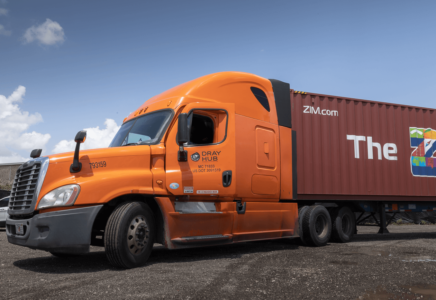
Telex release, original bill of lading, or seaway bill — how each one changes container release timing and drayage scheduling in South Florida.
Telex Release vs Original Bill of Lading: What Importers Need to Know
Telex Release vs Original Bill of Lading: What Importers Need to Know
Every imported container in South Florida is released against a bill of lading — but how that bill of lading is released decides whether your driver rolls tomorrow morning or sits waiting on paperwork. Telex release, original bill of lading, and seaway bill are three different mechanics, and picking the wrong one is one of the most common reasons a container misses its last free day at PortMiami or Port Everglades.
What a bill of lading actually does
An ocean bill of lading (B/L) does three jobs at once: it is a receipt for the cargo, evidence of the contract of carriage, and — in its negotiable form — a document of title. That third job is the one that creates release problems. If the B/L is a document of title, the ocean carrier will not release the container to anyone who cannot surrender it.
Everything below is about how that surrender happens.
Original bill of lading (OBL)
The carrier issues a set of originals — usually three — and the shipper couriers them to the consignee or to a bank under a letter of credit. The consignee surrenders one original to the carrier’s destination office, the carrier issues the delivery order, and only then can a drayage carrier pick up.
When you would use it
- Letter of credit transactions where a bank controls title.
- Open-account sales where the seller wants payment before release.
- High-value cargo where the seller has not been paid in full.
The risk
Paper travels by courier; containers travel by ship. On a short Caribbean or Latin American lane into Miami, the vessel routinely beats the documents. The container discharges, free time starts, and the originals are still in a DHL bag. Demurrage accrues at the terminal while nobody can legally take delivery.
Telex release (express release)
A telex release is not a separate document — it is a message. The shipper surrenders the full set of originals at the origin office, and the carrier’s origin office notifies its destination office that the cargo can be released against identity verification alone. No paper needs to cross the ocean.
Practically, once the telex is on file, the consignee pays local charges, the carrier issues the delivery order, and the container is available as soon as customs clears it and the terminal posts it. For importers who already have a relationship with their supplier, this is the default and it removes an entire failure mode from the timeline.
What to confirm before you rely on it
- That the shipper actually surrendered all originals — a partial surrender is not a release.
- That the telex is on file at the destination office, not just promised by the supplier.
- That freight and any origin charges are paid, since carriers hold release on unpaid charges regardless of the telex.
Seaway bill (non-negotiable)
A seaway bill is issued as non-negotiable from the start. There is no document of title, so there is nothing to surrender. The named consignee simply identifies itself and takes delivery. It is the fastest option and it suits intercompany moves, related-party shipments, and any relationship where the seller is not using the cargo as security for payment.
The trade-off is that the seller gives up leverage. Once the seaway bill names a consignee, the seller cannot practically stop delivery to force payment.
How each option changes your drayage timeline
Container release is only one of three gates. Nothing moves until all three are open:
- Carrier release — the bill of lading has been dealt with and freight and local charges are paid.
- Customs release — the entry has been filed and CBP (plus any partner agency) has released the shipment.
- Terminal availability — the container is discharged, grounded, and not on hold.
A telex release or seaway bill effectively removes courier transit time from gate one. With originals, you should assume the paperwork itself can consume most or all of your free time on a short-transit lane. If you are working with originals, tell your drayage carrier early so a pre-pull or an extension request can be discussed before the clock runs out rather than after. Our guide to last free day in drayage walks through how that clock is actually calculated.
A practical checklist for South Florida importers
- Ask your supplier which release type they are using at booking, not at arrival.
- If the answer is “originals,” ask them to switch to telex for repeat shipments where credit terms allow it.
- Get the arrival notice the day it is issued and check it against the release status.
- Confirm your customs broker has the entry filed before vessel discharge, not after.
- Send the release confirmation to your drayage carrier so dispatch can request a terminal appointment as soon as the container is available.
The importers who avoid demurrage are almost never the ones who negotiate hardest after the fact. They are the ones who lock down the release mechanic before the vessel sails. If you want the whole document set in one place, see our breakdown of the documents needed to pick up a container.
Where Go Drayage fits
We run an asset-based drayage operation out of a five-acre yard in Miami, serving PortMiami and Port Everglades. Because we own the trucks and the yard, we can pre-pull a container into secure storage the moment it is released rather than waiting for a warehouse door to open — which is often the difference between paying per diem and not. You can see current turn times on our container drayage page or start with a drayage quote.
Frequently asked questions
How long does a telex release take to process?
Once the shipper surrenders the originals at origin, the carrier’s internal notification is usually same-day or next-day. The variable is not the telex itself but whether the shipper has actually surrendered the documents and whether all freight charges are settled.
Can I get a container released if the original bill of lading is lost?
Usually yes, but not quickly or cheaply. Carriers typically require a letter of indemnity backed by a bank guarantee, often for a multiple of the cargo value. Plan on delay and cost, and keep accruing demurrage in mind while it is arranged.
Does the release type affect my demurrage and per diem?
Indirectly, and significantly. Free time runs from discharge regardless of your paperwork status, so a slow original-B/L release eats free time you have already been given. The release method does not change the clock; it changes how much of the clock you waste.