Drayage, intermodal rail and over-the-road trucking each move freight differently. Learn how they fit together and when to use each mode.
Drayage vs. Intermodal vs. OTR Trucking: What’s the Difference?
Drayage vs. Intermodal vs. OTR Trucking: What’s the Difference?
Logistics vocabulary confuses even experienced shippers: “drayage,” “intermodal,” and “OTR” get used loosely, sometimes interchangeably, yet they describe fundamentally different services with different equipment, pricing, and use cases. If you import through South Florida ports, you will likely use all three. Here is how they differ and how they connect.
Drayage: the short-haul container specialist
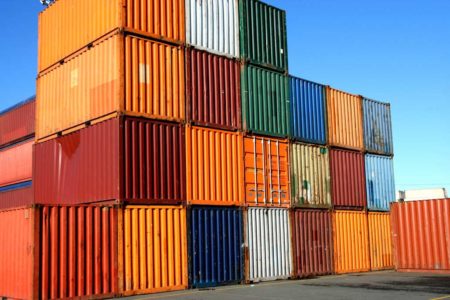
Drayage is the movement of ocean or rail containers over short distances — port to warehouse, terminal to rail ramp, yard to door. Moves are typically under 100 miles, use a tractor with a container chassis, and require port credentials: TWIC-carded drivers, UIIA interchange agreements, and terminal appointment know-how. Drayage is measured in turns per day, not miles per week; its economics revolve around free time windows, chassis clocks, and terminal congestion. For a deeper dive, see what is container drayage.
Intermodal: containers riding rail for the long haul
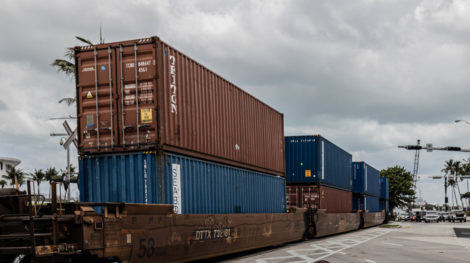
Intermodal means moving the same container across multiple modes — usually ship, rail, and truck — without touching the freight inside. A typical intermodal move from PortMiami to Atlanta: dray from terminal to the rail ramp, rail line-haul north, then dray from the destination ramp to the receiver’s dock. Intermodal wins on cost and fuel efficiency for hauls beyond roughly 500-700 miles, at the price of longer, less flexible transit. Note that every intermodal move begins and ends with a drayage leg — rail does not reach your dock.
OTR: the flexible long-distance workhorse
Over-the-road trucking moves freight in 53-foot dry vans, reefers, or flatbeds directly from origin to destination. It is faster and more flexible than rail with door-to-door service anywhere, but costs more per mile on long hauls. OTR enters the container story after transloading: strip an ocean container at a container freight station, reload onto domestic trailers, and the freight rides OTR from there — often cutting equipment charges and fitting more cargo per trailer.
Side-by-side comparison
- Distance: Drayage under ~100 miles; intermodal 500+ miles; OTR any distance, strongest under 500 miles or where rail doesn’t fit.
- Equipment: Drayage uses container-on-chassis; intermodal uses containers on well cars plus dray legs; OTR uses domestic trailers.
- Speed: OTR fastest door-to-door; drayage fast but local; intermodal slowest and schedule-bound.
- Cost: Intermodal cheapest per mile on long lanes; OTR premium for speed; drayage priced per move with accessorials.
- Credentials: Only drayage requires port access — TWIC, UIIA, and bond status. See our carrier selection checklist.
How the modes combine in a real import
Picture 30 containers of retail goods arriving at PortMiami destined for stores across the Southeast. The plan: drayage pulls all 30 to a Miami yard before free time expires; 12 deliver locally by drayage; 10 transload to 53-foot trailers and run OTR to Orlando and Tampa DCs; 8 stay in containers and ride intermodal to Atlanta. One shipment, three modes, each doing what it is cheapest and best at. The common denominator is the first mile: reliable port drayage and a yard that gives you options.
Which mode should you use?
Ask three questions. How far is the final destination? Under 100 miles, drayage direct; over 500, compare intermodal against transload-plus-OTR. How time-sensitive is the freight? Rail adds days. How much handling can the cargo tolerate? If the answer is “none,” keep it in the container. When in doubt, an asset-based 3PL that runs the port leg and the yard can model both options against your actual volumes — talk to our team.
Frequently asked questions
Is drayage considered trucking?
Yes — drayage is a specialized form of trucking focused on short-haul container moves to and from ports and rail ramps. The distinction is equipment and access: drayage requires container chassis, TWIC-carded drivers, and interchange agreements that general trucking companies do not carry.
Why does intermodal still need drayage?
Rail terminals are not final destinations. Every intermodal container needs a truck to move it between the ramp and the shipper or receiver dock, so drayage forms the first and last leg of every intermodal journey.
When does transloading to OTR beat staying intermodal?
When destination flexibility, speed, or equipment costs matter more than line-haul price: transloading lets you consolidate three ocean containers into two domestic trailers, stop per diem immediately, and deliver anywhere on your schedule.