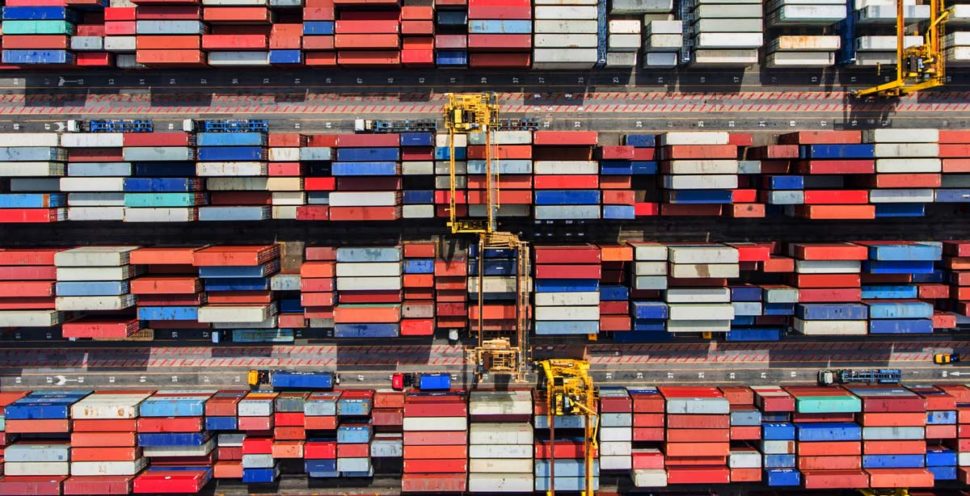
An ocean container is a harder environment than a truck Freight that survives a thousand highway miles can still arrive from overseas as a pile of crushed cartons. The reason is that the two journeys stress cargo in completely different ways. A truck mostly generates forward and lateral forces in bursts: braking, cornering, potholes. A […]
First decide whether you actually need an RFP A formal RFP is a real project. Someone on your team will spend weeks assembling data, writing questions, fielding clarifications, scoring responses and running site visits. That effort is worth it when the decision is complex, expensive and hard to reverse. It is wasted when the scope […]
What the IATA DGR actually is The IATA Dangerous Goods Regulations is the manual the air cargo industry uses to move hazardous materials safely by air. It is built on the ICAO Technical Instructions — the underlying international standard — and repackages them into a working format for shippers, forwarders and airlines, with additional operator […]
Why electronics move through Miami If a phone, laptop, TV panel or networking device is headed to Latin America or the Caribbean, there is a good chance it passes through South Florida first. Miami sits at the intersection of three things electronics distributors need at once: ocean capacity through PortMiami and Port Everglades, dense airline […]
Why beauty brands run logistics through Miami Miami has been the staging point for consumer goods heading south for decades, and beauty shows it clearly. Distributors, duty-free operators, salon chains, and retail groups across Latin America and the Caribbean buy through Miami because it puts three things in one place: a dense concentration of freight […]
Why viral demand breaks a DIY fulfillment setup Social commerce does not grow the way traditional e-commerce grows. A brand can sit at twenty orders a day for six weeks, one creator video lands, and the next morning there are two thousand orders waiting. The product was never the constraint; a two-person team packing at […]
Why density decides what your LTL shipment costs A carrier’s trailer runs out of space long before it runs out of weight, and that single fact explains most of LTL pricing. If your 600-pound pallet occupies the same linear feet as someone else’s 3,000-pound pallet, the carrier earns a fraction of the revenue for the […]
Why Miami is the default gateway to Argentina If you are moving cargo from the United States to Argentina, there is a good chance it passes through South Florida. Miami concentrates three things exporters need: deep-sea capacity at PortMiami and Port Everglades, major air cargo capacity at MIA, and a dense cluster of forwarders, brokers, […]
The Miami–Leeward Islands lane in plain terms Antigua sits at the operational center of the Leeward Islands. St. John’s Deep Water Harbour is the region’s main container gateway, with cargo berths handling containerized freight alongside a busy cruise trade. For shippers in the United States, Miami and Port Everglades are the natural origin: this is […]
Why Miami is the practical gateway to Suriname If you are moving cargo to Suriname from anywhere in the United States, the shipment almost certainly touches South Florida. Miami and Port Everglades handle the bulk of U.S. northbound and southbound Caribbean and Guianas trade, and the carriers, consolidators and container freight stations that serve Paramaribo […]