

Most import conversations in South Florida start and end with PortMiami and Port Everglades. But a few miles inland, a working waterfront of privately operated terminals along the Miami River moves a steady volume of cargo to and from the Caribbean and the Bahamas. If your freight touches one of those berths, the drayage looks different from a standard deep-water port move — different gates, different equipment, different paperwork rhythm.
This guide explains what changes when your container or break-bulk load routes through a river terminal instead of a marine terminal, and how to plan the trucking side so you are not paying for a wasted trip.
What makes the Miami River different
The Miami River is a shallow-draft waterway. The vessels calling there are small coastal freighters, not the post-Panamax ships that call PortMiami. That single fact drives almost everything else:
- Smaller parcels. A river vessel might carry a few dozen containers plus loose cargo, vehicles, pallets, and machinery on the same sailing.
- Private terminals. Rather than one port authority, the river is a string of independently operated yards. Each sets its own gate hours, receiving cutoffs, and paperwork requirements.
- Mixed cargo handling. Break-bulk, roll-on, and containerized freight often share the same apron, which changes how quickly a truck gets turned.
- Tight street access. Terminals sit inside dense urban blocks with narrow approaches and limited staging room.
Who actually ships this way
River terminals are heavily used for Caribbean and Bahamian trade lanes — building materials, food and beverage, used vehicles, household goods, generators, and consolidated pallets bound for islands that deep-water carriers serve less frequently or at higher cost. Exporters running smaller, more frequent shipments often find the river more practical than waiting for a weekly deep-sea sailing.
How the drayage differs
Appointments are terminal-specific, not port-wide
At the big marine terminals you are working inside a published appointment system. On the river, receiving windows are set by the individual terminal and frequently tied to the vessel’s loading schedule. Cutoffs move. A sailing that slips two days can push your delivery window with it, and a truck that shows up outside the window simply will not be received.
The practical fix is to confirm the receiving window with the terminal in writing on the morning of the move, not the week before. This is the same discipline that keeps terminal appointments at PortMiami and Port Everglades from turning into dry runs — it just matters more on the river, where schedules are less automated.
Equipment choice matters more
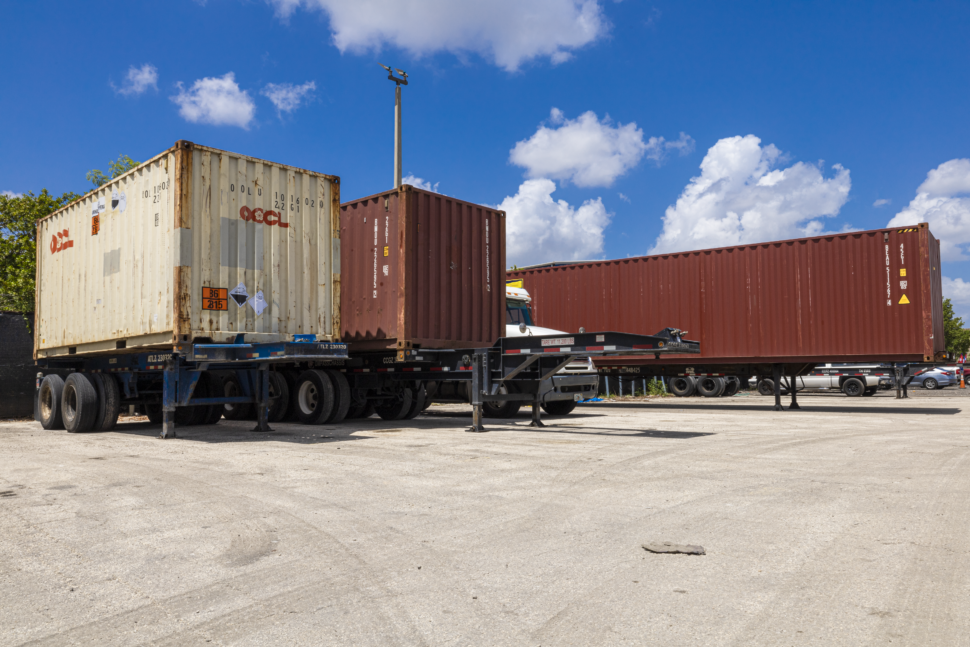
Not every river berth can take a standard 40-foot chassis combination comfortably. Depending on the terminal, the better answer may be a flatbed, a step deck, or a straight truck. For loose or oversized pieces, a flatbed with proper securement is often the only option. If your cargo is heavy or out-of-gauge, coordinate early with a carrier that runs its own heavy hauling equipment rather than assuming a container chassis will work.
Staging is usually required
Because receiving windows are narrow and street parking around the river is impractical, most shippers stage export freight at an off-dock yard and release it to the terminal in one clean trip. A secure yard with same-day release capability — like our Miami yard storage — turns an unpredictable cutoff into a scheduled delivery you control.
Documentation and compliance
River cargo is still ocean export cargo. That means the same fundamentals apply:
- Electronic Export Information filing where required, with the ITN available before the cutoff
- Accurate commercial invoice and packing list, including piece counts for loose cargo
- Verified gross mass for containerized loads
- Booking number and terminal-specific receiving reference
- Hazardous declarations and placarding where applicable
Vehicles add another layer. Used car exports require title documentation presented to CBP ahead of lading, and terminals will refuse to receive a unit without a clean paperwork package. Build that lead time into the trucking plan rather than discovering it at the gate.
Cost expectations
River drayage is typically priced as a short local move, but the variables that drive cost are different from a port container run:
- Wait time. Mixed-cargo aprons mean unloading queues. Detention accrues quickly when a vessel is working.
- Equipment type. Flatbed and step deck rates run above standard chassis rates.
- Second trips. A missed cutoff usually means redelivery, not a short delay.
- Staging. A few days of yard storage is often cheaper than two attempts at the gate.
If you want an apples-to-apples comparison against a deep-water routing, it helps to understand how drayage accessorial charges are built before you compare two quotes side by side.
When to choose the river — and when not to
The river makes sense when your volumes are modest, your destination is a Caribbean or Bahamian port with limited deep-sea service, and sailing frequency matters more than unit economics. It makes less sense for high-volume containerized programs, refrigerated cargo needing plug capacity, or anything on a rigid retail delivery schedule.
For most South Florida importers and exporters, the honest answer is that both routings have a place. The mistake is assuming the trucking plan transfers unchanged between them.
Planning your next river move
Three things will save you the most trouble: confirm the receiving window the day of, match the equipment to the berth rather than to the cargo description, and stage the freight locally so a schedule change costs you a phone call instead of a redelivery. Go Drayage runs company-owned trucks, flatbeds, and a five-acre secure yard in Miami, which makes that kind of flexibility practical rather than theoretical. Request a drayage quote and we will scope the move against the specific terminal you are working with.
Frequently asked questions
Is Miami River drayage cheaper than PortMiami drayage?
Not automatically. The linehaul distance is often similar, and river moves can carry higher wait time and specialized equipment costs. The savings, when they exist, usually come from the ocean freight side and from sailing frequency — not from the trucking leg.
Can you deliver a standard 40-foot container to a Miami River terminal?
Often yes, but it depends on the specific terminal’s apron and approach. Some berths are better suited to flatbed or straight-truck deliveries. Confirm equipment acceptance with the terminal before dispatch.
How far in advance should export cargo be staged?
For river sailings we generally recommend having the freight in a local yard two to three business days before the published cutoff. That absorbs vessel schedule changes without triggering a redelivery.