

Transloading and cross-docking both move freight from one vehicle to another without long-term storage — which is why the terms get swapped constantly. But they solve different problems, use different equipment, and belong at different points in a supply chain. Here’s the clean distinction, plus how each works in a Miami port operation.
Transloading: changing equipment types
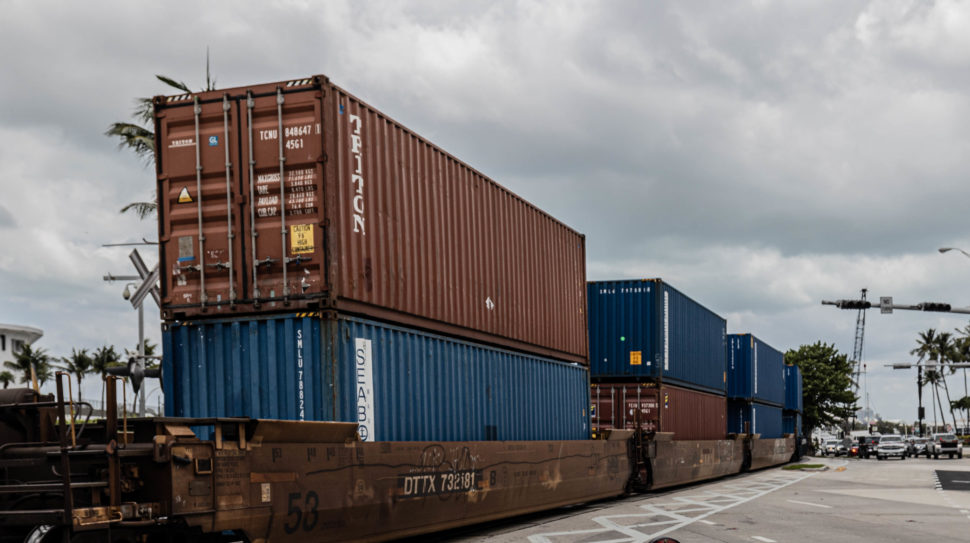
Transloading is transferring cargo between different types of transportation equipment — most commonly from a 40ft ocean container into a 53ft domestic trailer.
The economics are simple: a 53ft trailer holds roughly the contents of 1.3 ocean containers. Consolidating three ocean boxes into two domestic trailers cuts inland linehaul costs, and returning the ocean container quickly stops per diem charges.
Typical Miami transload flow:
- Drayage truck pulls the container from PortMiami or Port Everglades.
- At the yard, forklifts (ours handle 19,000–40,000 lb) move cargo from the container to trailers — floor-loaded or palletized.
- The empty ocean box returns to the terminal; domestic trailers roll north.
Transloading is also the moment to add value: palletizing floor-loaded freight, sorting SKUs by destination, segregating damaged cartons, or staging partial loads in yard storage until orders release.
Best for: import volume heading inland, per diem pressure, floor-loaded containers that retailers won’t accept as-is.
Cross-docking: changing vehicles, not equipment types
Cross-docking is transferring freight from inbound trucks directly to outbound trucks — dock door to dock door — with little or no dwell time. Same equipment class in and out; the point is speed and consolidation, not equipment conversion.
A classic cross-dock: five inbound LTL shipments arrive in the morning, get sorted by destination lane, and leave on three outbound trailers the same afternoon. Nothing is put away; nothing is picked. The facility is a sorting valve, not a warehouse.
Best for: distribution networks with predictable flow, retail replenishment, consolidating many small shipments into full truckloads.
The practical differences
Equipment
Transloading converts between container and trailer (or rail car and truck); cross-docking keeps freight in the same mode.
Dwell time
Cross-docked freight moves in hours. Transloaded freight may stage a few days, especially when consolidating multiple containers.
Handling depth
Transloading often includes palletizing, sorting, and re-stacking. Cross-docking aims to touch freight once.
Where it happens
Transloading lives near ports and rail ramps — a container freight station or port-adjacent yard. Cross-docks sit at network hubs along trucking lanes.
Which one does your freight need?
Ask where the cost pressure is:
- Paying per diem or demurrage on ocean equipment? Transload. Get the box back and move cargo on domestic trailers.
- Paying too much inland linehaul per container? Transload and consolidate — three boxes into two trailers.
- Running a multi-vendor retail program with tight store windows? Cross-dock.
- Importing floor-loaded cargo a distribution center will reject? Transload with palletizing.
Many South Florida importers use both: transload at the port, then cross-dock at a regional hub. The key is doing the port-side work close to the terminal — every mile a container travels before transloading adds drayage cost and per diem risk. Our transload operation sits minutes from both ports, backed by asset-based container drayage, so the container cycle stays short.
Want to see if transloading pencils out for your volume? Get an instant number from our drayage quote tool or call (786) 445-0150.
Frequently asked questions
Is transloading more expensive than cross-docking?
Per touch, usually yes — transloading involves more handling (devanning, palletizing, restacking). But it typically pays for itself in lower inland linehaul and avoided per diem charges.
Does transloading increase damage risk?
Any extra handling adds some risk, which is why forklift capability and trained crews matter. Professional transload facilities use proper equipment and document cargo condition at transfer.
Can I store freight during a transload?
Yes. Unlike cross-docking, transloading often includes short-term staging — for example, holding cargo in a secure yard until your receiving dock or your buyer is ready.