

“Where’s my container?” is still the most common question in drayage — and at too many trucking companies, the answer still involves a dispatcher, a phone call, and a promise to call back. Modern container tracking eliminates that loop. Here’s what real visibility looks like on the dray leg, why it matters more than shippers expect, and what to ask a carrier before trusting their “tracking” claim.
Why the dray leg goes dark
Ironically, the shortest leg of an international shipment is often the least visible. Ocean carriers publish vessel milestones, and terminals publish discharge and gate events, but once a container leaves the port on a truck, many shippers lose sight of it until a delivery confirmation arrives — sometimes the next day. That gap matters because the dray leg is where the expensive, time-sensitive decisions live: demurrage deadlines, dock appointments, per diem clocks, and customer delivery promises.
The milestones that actually matter
Good drayage visibility isn’t a dot on a map for its own sake — it’s a set of timestamped events your team can act on:
- Terminal outgate — the box is off the pier; the demurrage clock is closed.
- Yard arrival / departure — for pre-pulled containers, where the buffer time is spent.
- Delivery arrival and departure — dock time drives detention billing in both directions.
- Empty return ingate — the per diem clock is closed; this receipt wins disputes.
Live GPS between milestones adds ETA precision — the difference between a warehouse crew waiting at a dock and a driver waiting outside a full one.
What visibility is worth in dollars
Tracking sounds like a convenience feature until you price the failure modes it prevents. A missed Last Free Day is a few hundred dollars a day. A dock crew scheduled for a container that arrives three hours late is paid idle labor. An empty returned late because nobody watched the clock is a per diem invoice. Multiply across a month of containers and visibility is a line item, not a luxury. It also changes dispute economics: timestamped gate receipts and geofenced arrival records turn “we believe the container was returned on the 14th” into evidence.
How Go Drayage handles it
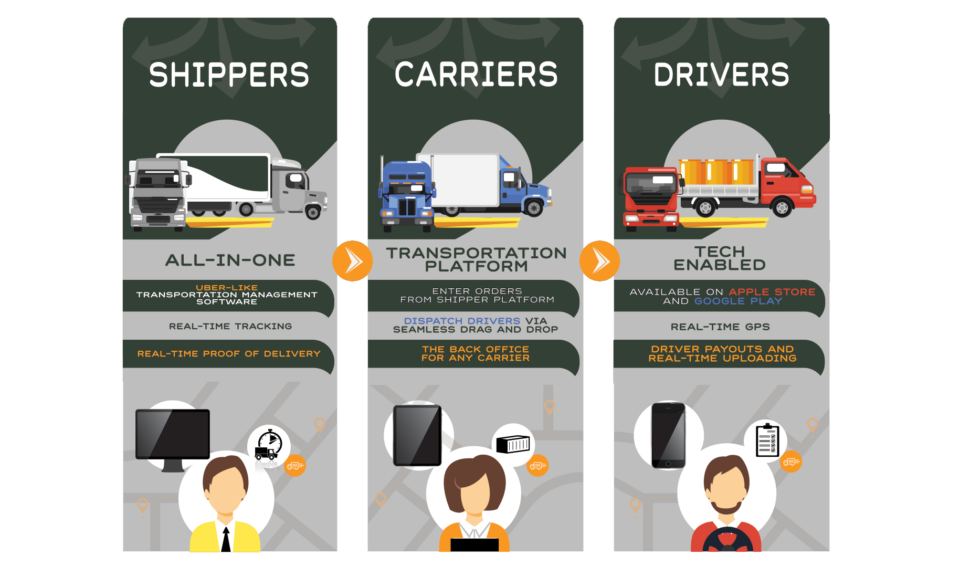
Our operation runs on Go Truck Hub, a transportation management system built within our own group, with live shipment status exposed to customers through the online shipment tracker. Every container move — port pull, yard storage dwell, final delivery, empty return — carries timestamps you can see without calling anyone. Because the trucks are company-owned, the data comes from our own telematics rather than a patchwork of subcontractors’ phones, which is what keeps it consistent. You can read more about the platform on our proprietary technologies page.
Questions to ask any carrier claiming “real-time tracking”
- Is the GPS data from your own trucks, or from owner-operators’ phone apps?
- Can my team self-serve status, or do we email your dispatcher?
- Which milestones are timestamped automatically versus entered by hand?
- Can you send status updates or reports my customers can use?
- How long is event history retained for dispute support?
Carriers with real systems answer these in one sentence each. Carriers without them change the subject to their years of experience.
Frequently asked questions
Is container tracking included or an extra charge?
At Go Drayage it’s included — visibility is part of the service, not an upsell. Some carriers charge for portal access or per-shipment notifications, so it’s worth confirming before you compare rates.
Can I track a container before the truck picks it up?
Yes — vessel and terminal milestones (discharge, availability, Last Free Day) come from port data feeds and appear before dispatch, so the pickup itself can be timed against free time rather than guessed.
Do you share tracking with my customers?
If you want. Forwarders and brokers often pass tracking through under their own communication — your customer sees the milestone, not our name.