


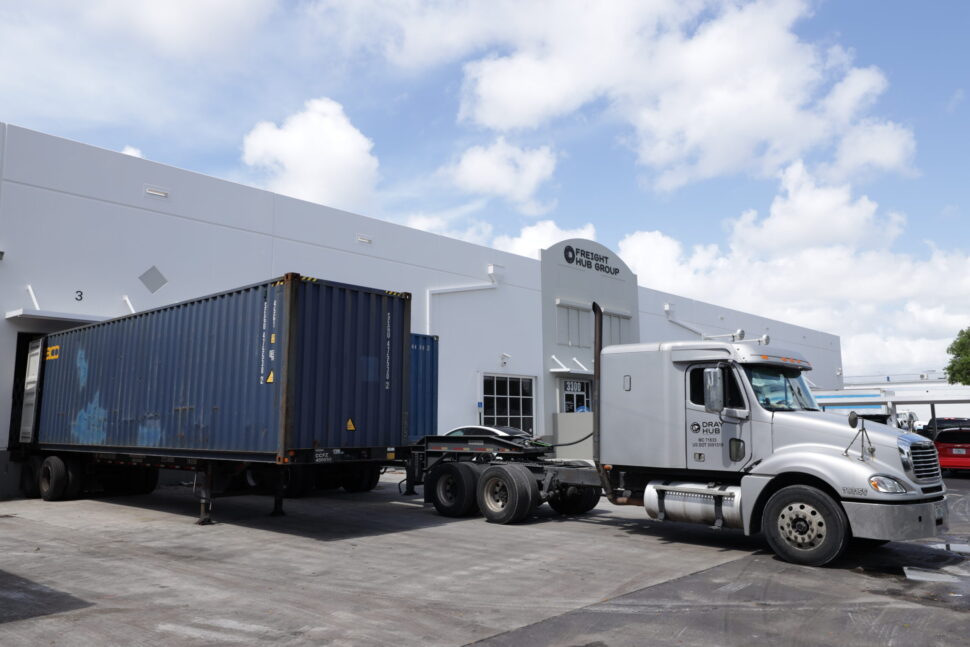
Moving a container for a county agency, a school district, a hospital system or a university is not operationally different from moving one for an importer. The truck is the same, the terminal is the same, the chassis is the same.
What is different is everything around the move: the paperwork that has to exist before a purchase order is issued, the insurance requirements, the invoicing format, and the delivery constraints at institutional sites. Carriers that have not done this work before get stuck at the procurement stage rather than at the gate.
What procurement teams typically require
A certificate of insurance that matches the solicitation exactly
This is where most carriers fail first. Public and institutional buyers specify coverage types and limits – commercial auto liability, general liability, cargo, workers’ compensation – and they specify that the entity be named as an additional insured, often with specific wording and sometimes with a waiver of subrogation.
A standard certificate is not enough. The certificate has to name the right entity, at the right address, with the right endorsements attached. Getting this from an insurance agent takes days, not hours, so it has to start well before the bid deadline.
Registration in the buyer’s vendor system
Counties, municipalities and school districts run their own supplier portals. Registration typically requires a W-9, business licenses, proof of insurance, and sometimes a local business tax receipt. It is administrative, it is slow, and it cannot be done retroactively when a container is already at the terminal.
Operating authority and safety record
Expect the buyer to verify active motor carrier operating authority and to look at the carrier’s public safety record. Some solicitations set a minimum standard explicitly. Carriers that hold recognized industry credentials – UIIA participation, TSA-related certifications, customs bonded status – can usually satisfy these questions from documents they already hold.
Diversity, local preference and set-aside programs
Many Florida public entities operate small business, minority business or local vendor preference programs. These do not change the physical work but they change scoring, and a carrier should know where it stands before bidding.
Documentation during the move
Institutional buyers reconcile against a purchase order, and their accounts payable process is unforgiving of mismatches. Practical requirements:
- The PO number on every document – dispatch confirmation, delivery receipt, invoice.
- Itemized invoicing. A lump-sum “drayage” line will often be rejected. Base rate, chassis, fuel, waiting time and any accessorial should each appear separately with the container number attached.
- Proof of delivery with a printed name, signature, date and time. A driver’s note is not sufficient for most institutional AP departments.
- Advance notice of accessorials. Many purchase orders will not pay a charge that was not authorized in advance. If a container is going to need a pre-pull or extra storage, that needs written approval before it happens, not an explanation afterward.
That last item is worth emphasizing. In commercial drayage, an unexpected accessorial is a conversation. In public procurement it can be an unpayable invoice. Our accessorial charges guide is a useful reference to attach to a PO so the buyer knows what can arise.
Delivery constraints at institutional sites
Schools, hospitals, courthouses and municipal facilities were not designed around 65-foot vehicle combinations. Recurring issues:
- Restricted delivery windows. Schools frequently prohibit large vehicle movements during arrival and dismissal periods. Hospitals restrict dock access around shift changes.
- Security screening at the gate. Driver identification, vehicle inspection and a pre-submitted visitor list are common, and a driver not on the list does not enter.
- Escort requirements on secured campuses, which have to be scheduled.
- No dock, or a dock sized for box trucks. Ground-level unloading with the institution’s own equipment, or a transload to a smaller vehicle, is often the practical answer.
- Weight-restricted campus roads that cannot take a loaded container-on-chassis.
Where the site cannot take a container at all, the clean solution is to strip the container near the port and deliver on a vehicle the facility can accept. Our transloading service exists for exactly this class of problem.
Timeline realities
Public sector timelines are built around approval cycles rather than vessel schedules, and the two do not naturally align. A container that arrives before the PO is fully approved still accrues demurrage.
The workable pattern: get the drayage vendor approved and on contract well before any shipment, so that when a container lands the only thing needed is a release. Where approval is genuinely pending and a container is on the water, plan a pre-pull to a storage yard – terminal demurrage typically costs considerably more per day than yard storage, and it removes the deadline pressure from the approval process. Our yard storage in Miami is used this way regularly.
What to look for in a carrier for this work
- Insurance limits that already meet or exceed common public specifications, with a broker who can issue endorsed certificates quickly.
- Asset-based operations, so subcontractor insurance and screening is not an additional layer of risk to document.
- Existing credentials – UIIA, customs bonded, recognized security programs.
- Itemized invoicing and the ability to carry a PO number through the whole document chain.
- Storage capacity near the port for approval-cycle delays.
- Transload capability for sites that cannot receive containers.
If you are preparing a solicitation or evaluating a response, our about page lists the credentials we hold, and a drayage quote will give you an itemized structure you can put into a bid comparison.
Frequently asked questions
What insurance limits do Florida public agencies usually require for container drayage?
Requirements are set by each entity in its solicitation and vary considerably, so the only reliable answer is the one in the document you are bidding on. What is consistent is the expectation of commercial auto liability, general liability, workers’ compensation and cargo coverage, with the buying entity named as additional insured on a properly endorsed certificate.
Can a container be delivered directly to a school or hospital campus?
Sometimes, but campus road weight limits, restricted delivery windows and the absence of a container-height dock often make it impractical. Transloading near the port and delivering on a box truck or flatbed the site can receive is usually faster and avoids a failed delivery.
How should accessorial charges be handled on a government purchase order?
Get them authorized in advance in writing. Many public purchase orders will not pay charges that were not approved before they were incurred, so a carrier should flag any likely accessorial – waiting time, pre-pull, storage, overweight handling – at the quoting stage and request written approval before performing it.