


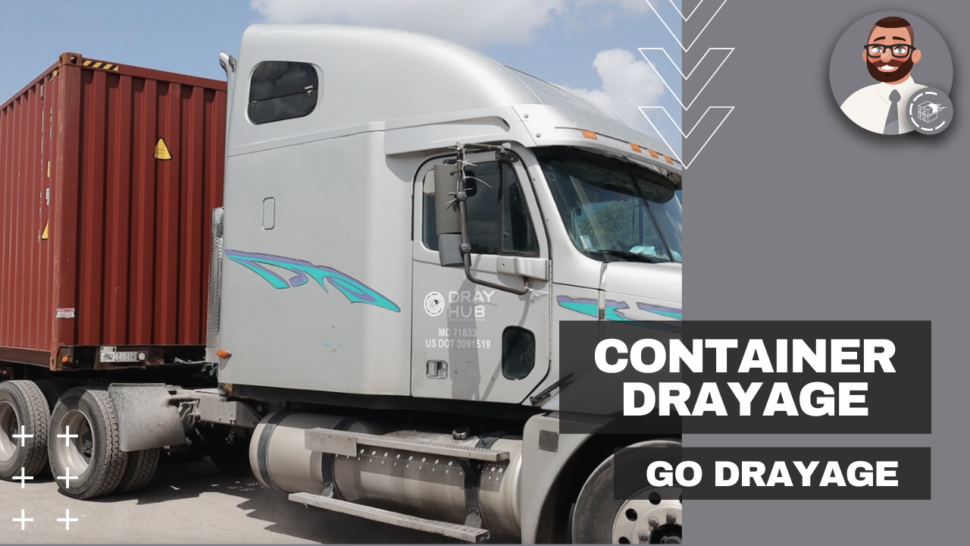
A driver scales a container that is comfortably under the gross weight limit and gets cited anyway. The paperwork says 42,000 pounds of cargo in a 40-foot box, which should be fine. The scale says the drive axles are over.
This is one of the most common and least understood problems in container drayage, and it is almost never the trucking company’s fault. It is a loading problem that becomes a trucking problem three thousand miles later.
Gross weight is not the only limit
Highway weight enforcement works on three separate tests, and a vehicle has to pass all of them:
- Gross vehicle weight — the total, commonly 80,000 pounds for a standard five-axle combination without a permit
- Individual axle and axle group limits — typically expressed as limits on the steer axle, the drive tandem, and the trailer tandem
- The bridge formula — which relates allowable weight to the distance between axles, and can restrict a combination below the gross limit
A container can satisfy the gross test and fail the axle test badly. The reason is that a shipping container is a sealed box with no way to redistribute what is inside.
How the cargo position creates the problem
Imagine a 40-foot container where all the cargo is packed into the forward half and the rear half is empty. The total weight is legal. But the load’s center of gravity sits far forward, which shifts weight onto the tractor’s drive axles.
The same weight, distributed evenly across the full floor, would sit legally. The same weight packed into the rear would overload the trailer tandem instead.
This happens constantly with:
- Dense partial loads — stone, tile, machinery, beverages, paper — where the container cubes out long before it fills
- Single heavy pieces not centered on the floor
- Mixed loads where the heavy items were loaded first and stayed at the front
- Containers packed for stowage stability rather than for highway axle distribution — which is most of them
The origin packer is optimizing for a vessel. Nobody in that warehouse is thinking about a Florida drive tandem.
What a driver can and cannot fix
Sliding the chassis tandems
On a chassis with adjustable tandems, sliding the axles rearward moves weight off the drives and onto the trailer group; sliding forward does the opposite. This is the primary field adjustment and it solves many marginal cases.
Its limits: not every chassis has adjustable tandems, the adjustment range is finite, and moving the tandems changes the effective axle spacing, which can create a bridge formula problem even while solving an axle weight problem.
Sliding the fifth wheel
Some tractors allow this, shifting load between steer and drive axles. Useful for fine adjustment, not for gross imbalance.
What cannot be fixed
If the container is genuinely misloaded — all the weight in one third of the box — no axle adjustment will make it legal. The realistic options become a permit, a tri-axle or spread-axle chassis, or devanning and redistributing the cargo.
Why this matters more in South Florida
Two reasons. First, the import mix here is weight-dense: stone and tile, beverages, building materials, bagged agricultural products. Second, many drayage moves are short, and short moves make permitting proportionally more expensive relative to the linehaul.
The local road network adds a third factor — bridge and route restrictions in Miami-Dade mean a permitted overweight move may not follow the direct route. Our Miami-Dade truck routes guide covers that network, and overweight container drayage in Florida covers permitting.
What shippers can actually control
At origin
- Specify even weight distribution across the container floor in your packing instructions
- For dense cargo, specify a spread pattern rather than a solid block at one end
- Require a loading diagram or photographs for heavy shipments
- Consider underloading a 20-foot container rather than maximizing it
Before dispatch
- Provide the actual verified gross mass, not a rounded estimate — accurate VGM is a legal requirement and a practical necessity. See our VGM guide.
- Flag heavy containers to the carrier so the right chassis is assigned from the start
- Where a container is known to be misloaded, plan a transload instead of hoping
When it goes wrong anyway
The container comes back to a yard, gets devanned, and the cargo is reloaded onto trucks that can carry it legally. That costs a handling cycle. It costs far less than an out-of-service order, a fine, and a stranded load on the shoulder of the Palmetto. Our transloading guide covers how that recovery works.
The bottom line
Gross weight tells you whether a container is heavy. It does not tell you whether it is legal to move on a highway. For weight-dense commodities, the distribution question deserves as much attention as the total — and it is far cheaper to address in the packing instructions than at a weigh station.
Go Drayage runs company-owned tractors, tri-axle capability, forklifts rated to 40,000 pounds, and a five-acre Miami yard, which means heavy and awkwardly loaded containers can be handled rather than refused. Get in touch with your weights and we will tell you what equipment the move actually needs.
Frequently asked questions
Can a container be legal on gross weight but still over on axles?
Yes, and it is common. Gross weight, individual axle limits, and the bridge formula are separate tests, and a container loaded unevenly can pass the first while failing the second. Because the cargo is sealed inside, the driver cannot redistribute it in the field.
Does sliding the tandems always fix an axle weight problem?
No. Sliding adjustable tandems shifts weight between the drive and trailer axle groups and resolves many marginal cases, but the adjustment range is limited and it changes axle spacing, which can create a bridge formula issue. Severely misloaded containers cannot be corrected this way.
Who is responsible if a container is misloaded at origin?
Liability depends on the contract and the circumstances, but the practical burden usually falls on the motor carrier and driver, who are responsible for operating legally regardless of how the box was packed. That is why accurate weight information and clear packing instructions to the origin shipper matter so much.